
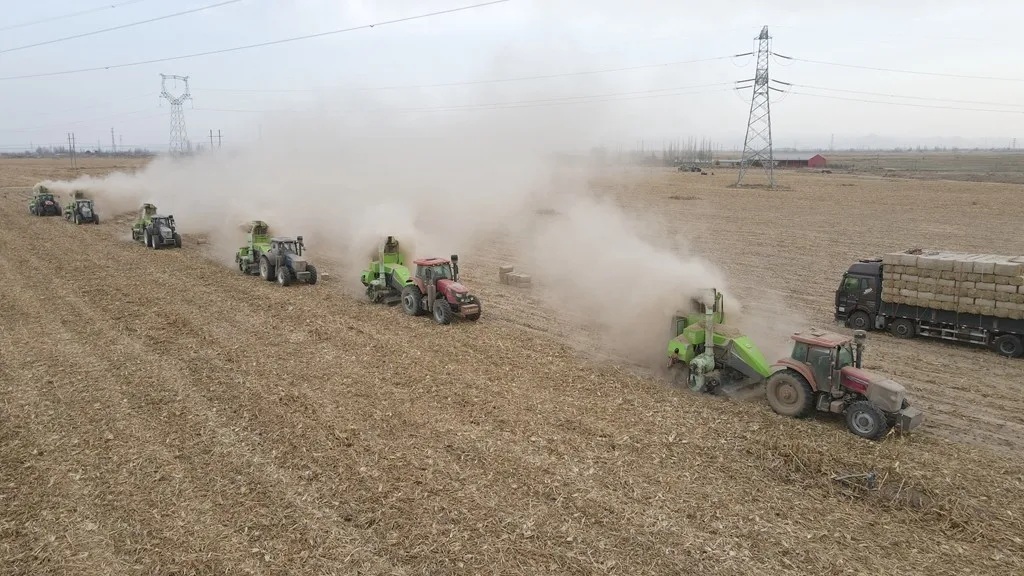
The National Conference on Tractor Technology Changes in Spring
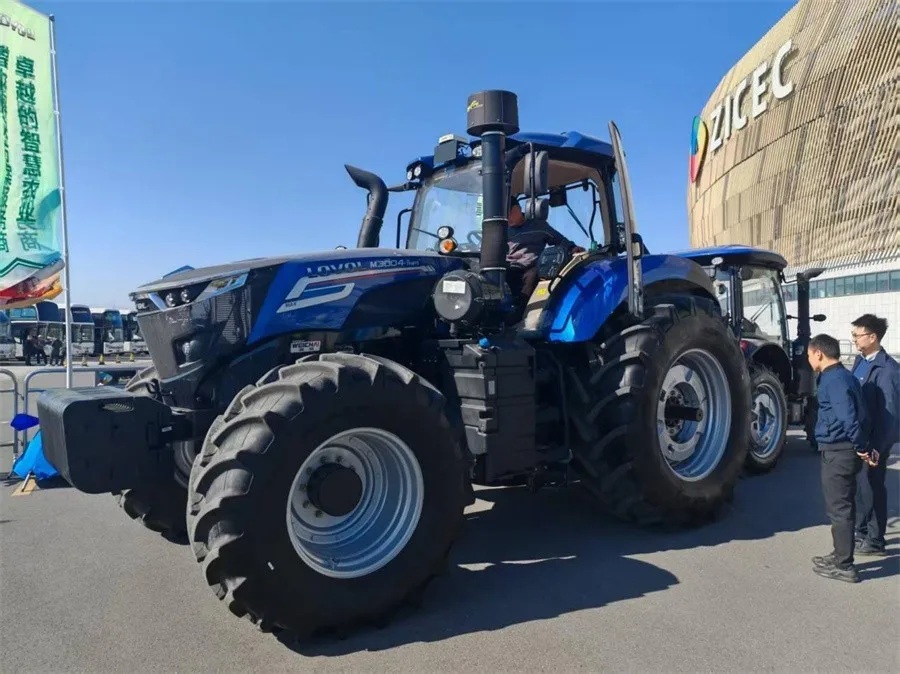
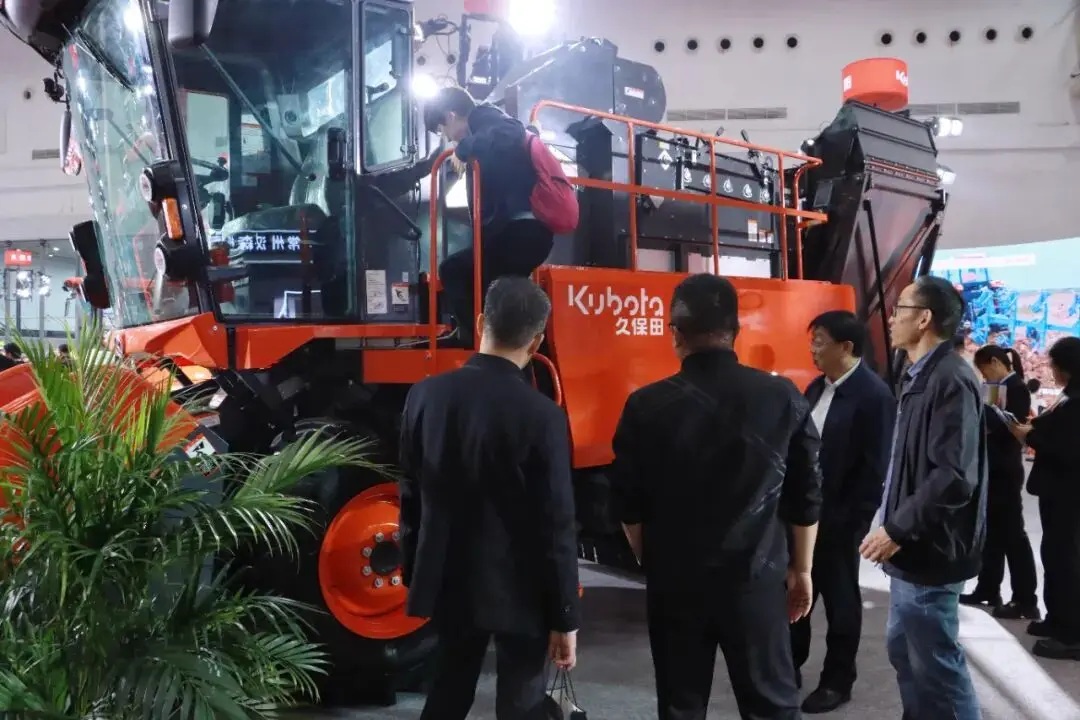
The annual National Spring Agricultural Machinery Exhibition has once again arrived at the Zhumadian Convention and Exhibition Center. Despite the industry entering a downturn and many enterprises facing business challenges, the exhibition still attracted more than 600 companies to participate. Companies that did not participate also sent representatives to the venue, gathering many business leaders on site, aiming to seek ways to break through through the situation through peer exchanges and business cooperation.
At the Spring Agricultural Machinery Exhibition, tractor products are still the undisputed protagonist. According to incomplete statistics, more than 40 tractor companies participated in this exhibition, including well-known companies such as Yituo Dongfanghong, Weichai Lovol, Dongfeng Agricultural Machinery, and Deutzfal. The exhibition is an extension of market competition, and products are the core of exhibition competition. So, what are the new characteristics of the tractor industry at this year's Spring Conference? Let's analyze from the perspective of tractor technology roadmap.
1、 Power shuttle battle is raging
At present, the domestic tractor industry is facing the dilemma of choosing between mechanical transmission, automatic transmission, pure electric, hybrid, as well as multiple technological routes and energy sources such as hydrogen and methane The divergence in technological routes is closely related to both the commercial behavior of enterprises and the direction of subsidy policies.
In August 2024, the new three-year agricultural machinery purchase subsidy policy will be issued and implemented. The subsidy for traditional mechanical shift tractors will be reduced, while the subsidy for automatic transmission tractors will be increased. The subsidy standards for power reversing, power shifting, and CVT tractors will be the same.
The power reversing technology is mature, and most domestic enterprises have the ability to provide products, and its terminal price is much lower than that of CVT tractors. Therefore, power reversing tractors have a high cost performance ratio and are more popular. In 2025, enterprises will be enthusiastic about this, and this will be evident at the spring exhibition.
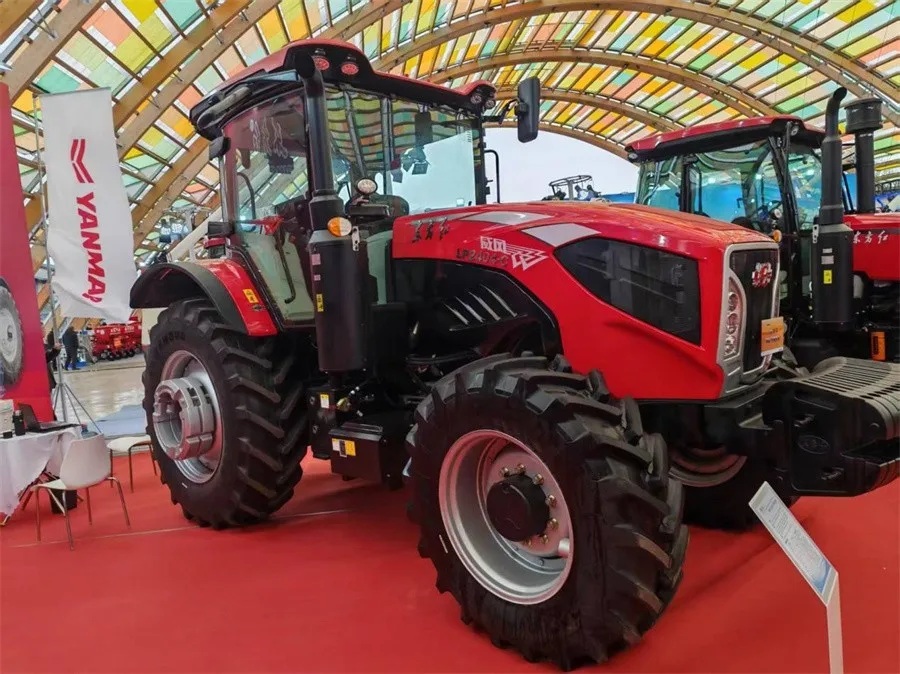
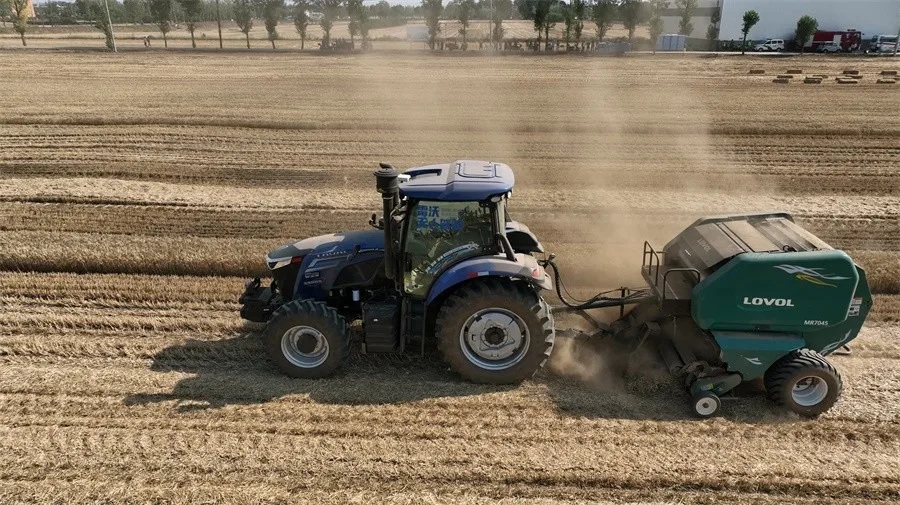
At this exhibition, Yituo exhibited power reversing tractors such as LP2604-C, LMA2004-C, LXM1604-C, MY1204-9, etc. It is reported that Yituo has successfully developed a full range of power reversing and power shifting tractors covering the power range of 80 to 320 horsepower. Weichai Lovol exhibited multiple power reversing products such as P1204-4P2 and M3004-7NP1, which adopt power high and low gears+power reversing, and electronically controlled wet clutch. It is said that it has significant technical advantages among similar products. Huanghai Jinma exhibited the YQX1804 power reversing+power high and low range tractor; Dongfeng Agricultural Machinery exhibited the DF2804-PS power reversing tractor, with main transmission AMT electronic synchronizer shifting and auxiliary transmission interval power shifting; Hanwo exhibited HP2604-G power reversing and high/low power tractor; Luoyang Harvest exhibited the Fenmeide FC2104-P power reversing tractor; Yingxuan exhibited the YX2004-5P power reversing tractor.
It can be seen that the dynamic reversing tractor is a hot topic at this exhibition, and secondly, different enterprises have different technical solutions. Overall, Shandong series tractors mainly follow the technical path adopted by Lovol, which combines power high and low gears with dynamic reversing and is equipped with an electronically controlled wet clutch.
Of course, not all companies have the production capacity of power reversing tractors. It is worth noting that although a well-known enterprise showcased nearly 10 high-power tractors at the exhibition, it did not display power reversing tractors. Some small businesses are still exhibiting tractors with meshing sleeve gearboxes.
2、 Power shift, CVT long line layout
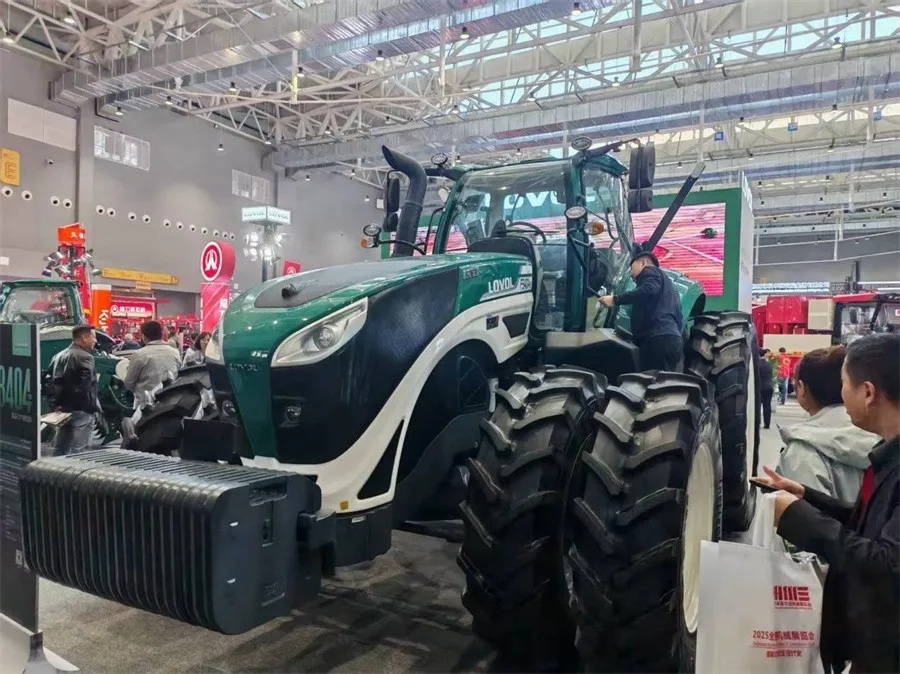
From the perspective of seizing real demand, this year's tractor companies attach the most importance to power reversing tractors. As the subsidy policy has become clear, since power reversing, power shifting, and CVT are the same subsidy standard, "the two benefits are equally important", companies need to seize this year's subsidy policy dividends, and of course, prioritize the promotion of power reversing tractors. Therefore, the enthusiasm of domestic tractor companies for power shifting and CVT tractors has decreased this year. Several supply chain companies that provide gearboxes have also expressed their intention to focus on power reversing gearboxes this year, and the power shifting will be slowed down first.
There are not many power shift and CVT tractors at the spring meeting. The tractors exhibited by Weichai Lovol this year can be divided into two series: CVT and power reversing. Lovol CVT products have formed a systematic system and truly achieved commercial application. This time, the main sales models such as P3404-8V and P2404-7V were exhibited.
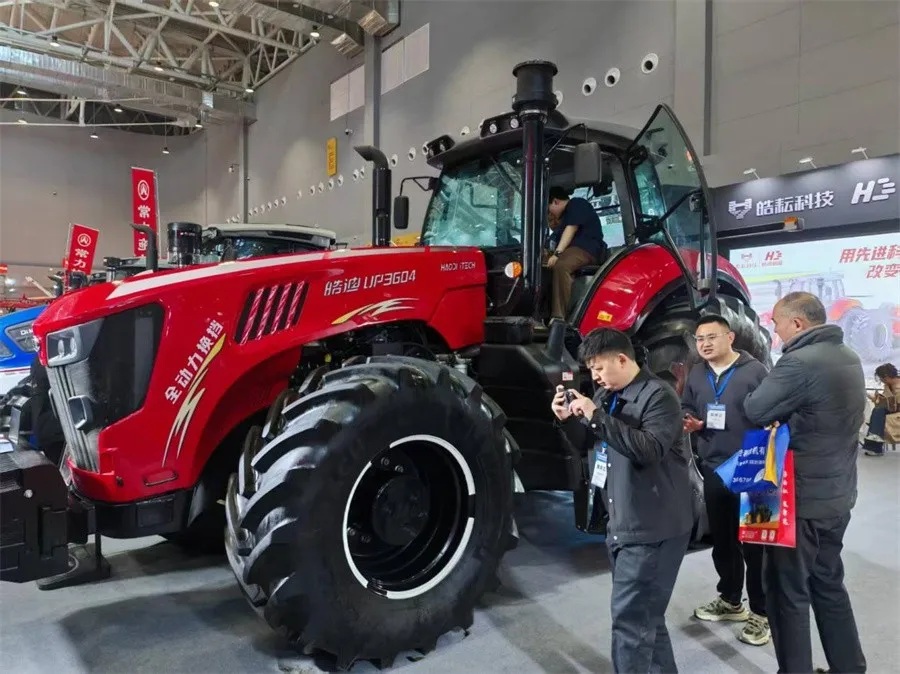
After the restructuring of Yangzhou Dimachi and Guangdong Ziyun Company, they made their first appearance at the national conference. The UP3604 full power shifting tractor was exhibited this time. The on-site staff introduced that the UP series tractor covers four power ranges from 3204 to 4004, equipped with a 16F+4R gearbox. According to the manufacturer, this is the only manufacturer to exhibit full power shifting tractors at this exhibition.
The number of companies participating in the spring fair itself is not large, and only about 40 tractor companies participated on site. Some well-known brands were absent, resulting in a lack of display of power shift and CVT products. The number of gearbox exhibiting companies is also limited. Weichai Power exhibited a 320 horsepower CVT powertrain, which was exhibited at the 2024 Changsha National Fair.
3、 Mechanical transmission remains the main sales force
Overall, there are many companies in the field of power steering that are not well prepared and have not exhibited their models; The threshold for power shifting and CVT technology is high, and some companies even find it difficult to complete prototype production, so the number of exhibiting companies and products is limited.
The real protagonist at this exhibition is still the traditional tractor with mechanical transmission. As far as the eye is concerned, it is still the world of tractors with meshing sleeve shifting, synchronizer shifting, and angular shifting.
It should be noted that despite the superior performance of automatic transmission tractors, the mainstream demand for mechanical transmission tractors with high quality, low price, stable performance, reliable use, and complete accessory services is still due to the significant decline in user profits and even widespread losses.
So companies don't need to panic and anxiety. In the first year of power shifting, mechanical transmission tractors still dominate the demand. If the mechanical transmission is done well, companies will still have food to eat. On the contrary, if they don't have the strength to develop automatic transmission tractors and have to grit their teeth, they may not only miss out on the benefits of automatic transmission, but also lose their foothold in the mechanical transmission product market.
Overall, there are the following new situations with mechanical transmissions: firstly, small and medium horsepower models have been given renewed attention. For example, tractors with a 50 horsepower transmission do not require the installation of exhaust treatment devices, making them cost-effective. Many small and medium-sized enterprises have highlighted the series of products with a 50 horsepower transmission; Secondly, product quality is improving, appearance is changing, and configuration is becoming more diverse. Mechanical transmission tractors have emerged from the quagmire of "big horse pulling small car" and low price competition in the past, and are now entering a new stage of quality competition. The market has even seen the phenomenon of disguising high-power models as small standard models, such as the original 90 horsepower model being labeled as 50 horsepower. The power of domestic medium horsepower tractors is "reversing", which is a good thing for users.
From the exhibition, it can be seen that on the one hand, no tractor company dares to take high subsidy models such as power reversing and power shifting lightly. On the other hand, no company dares to give up the current mainstream demand for mechanical transmission models. For many companies, power shifting and CVT symbolize the facade and image, while mechanical transmission plays an indispensable core role. Moreover, the demand for domestic agricultural machinery presents a diversified 'thousand layer cake structure'. Among them, low-end tractors and mechanical transmission tractors still have huge market demand and diverse application scenarios. If tractor companies lose mechanical transmission tractors, they will lose the site and inevitably have no future.
4、 Hybrid enthusiasm slightly decreased, waiting for policy boots to land
The enthusiasm for hybrid power in the automotive and construction machinery industries has not been replicated in the tractor industry.
At this exhibition, the obvious feeling is that tractor companies' enthusiasm for hybrid tractors has decreased. Before the introduction of the appraisal outline for hybrid tractors and the clarification of subsidy policies, domestic hybrid tractors will experience a period of low tide.
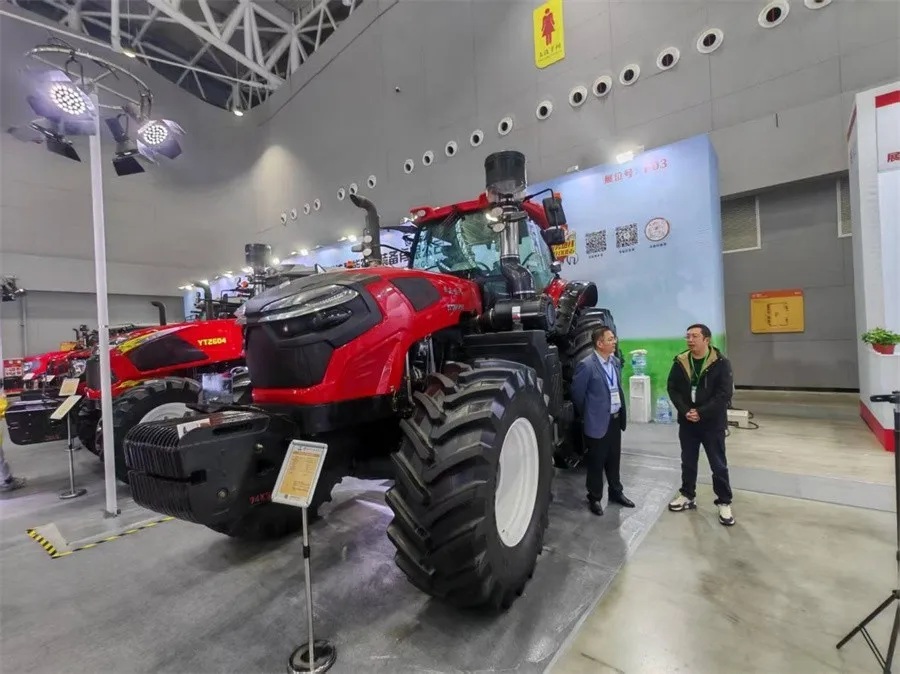
At the spring meeting, there were few participating companies for hybrid tractors, and the display of models was also thin. However, some well-known companies and their iconic models still appeared at the exhibition, attracting strong interest from professional audiences.
Such as Huanghai Jinma YX3004ET, Yingxuan Heavy Industry YX3004-8HEV, Dongfeng Agricultural Machinery DF2804 (F), etc., Hebei Kaite, which will exhibit a full range of hybrid tractors in Changsha, will be absent from this exhibition.
Hybrid tractors are temporarily in a slump, and subsidy policy orientation is the key. However, the appearance of the exhibition cannot be fully trusted, and the absence of enterprises does not mean neglect. In fact, many powerful tractor manufacturers in China are working together with Yuchai Power, Shangchai Power, etc., to promote the research and development and technological accumulation of hybrid tractors, either openly or secretly. Everything is ready, just waiting for the strong wind of the subsidy policy.
5、 Pure electric is rare
At this exhibition, it is somewhat surprising that pure electric tractors still did not receive enough attention, as it seems that only Huanghai Jinma exhibited a YL254ET pure electric tractor. This product has appeared at national exhibitions multiple times and has become a highly anticipated star exhibit, and the audience is quite familiar with it.
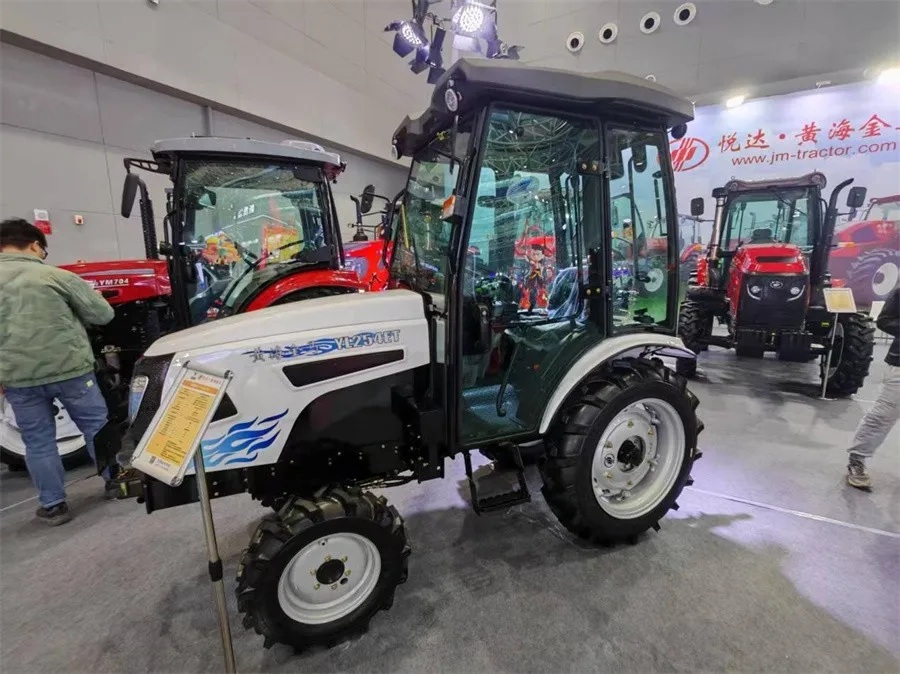
What is on display this time is a YL254ET with a cab, which has been upgraded in appearance and made more exquisite in workmanship. It is said that this product has achieved mass sales. In addition, it is rumored that Huanghai Jinma has successfully developed a 70 horsepower pure electric tractor, making us look forward to seeing it in Wuhan in October.
According to relevant experts, the reasons why pure electric tractors are not favored by enterprises at present are: firstly, they have not been included in the subsidy catalog, which represents that the attitude of policy-making is still wavering. As long as they do not enter the subsidy catalog, pure electric tractors will be difficult to commercialize in China; Secondly, the current cost is high and the price disadvantage is obvious. It is reported that YL254ET is priced at about 100000-130000 yuan, while a certain technology company's 140 horsepower pure electric tractor is priced at 500000 yuan. Compared with traditional tractors, electric tractors do not have a significant advantage in operating efficiency, but the price disadvantage is huge. In addition, the low acceptance of users has led to the embarrassing situation of pure electric tractors in China being in a state of having a price but no market.
According to the development history of electric vehicles in China, in the early stage of promoting electric tractors, the government will inevitably reduce user purchase and usage costs through large subsidies. Only when the scale effect is evident, costs are reduced, and prices are affordable, can large-scale production and application be promoted.
In addition, one reason for the lagging development of pure electric tractors in China is that companies have not yet found a good usage scenario. American Emperor Tractor focuses on vineyards, while Zhongke Original Power is developing usage scenarios for cattle farms. Although both directions may be correct, they require time to verify.
The hope for domestic pure electric tractors is twofold: on one hand, to enter the national agricultural machinery purchase subsidy catalog; on the other hand, to quickly find a suitable usage scenario. Subsidies can lower the purchase threshold, and suitable scenarios can promote technological maturity. Both are indispensable.
6、 Unmanned tractors are temporarily at a low point
Unmanned farms are being vigorously promoted throughout the country, but unmanned tractors are difficult to find in the national society, which is in stark contrast to the scene of heroes working on unmanned tractors three years ago.
The possible reasons for this phenomenon are as follows:
One is that it is too advanced, as there is currently no rigid demand. A new technology that can be industrialized and widely used by users is definitely not a problem of technological advancement, nor may it be a problem of the technology itself, but rather related to the operating environment of the machines. To be honest, in recent years, a considerable number of unmanned tractors we have witnessed have already possessed comprehensive operational capabilities such as farming, management, and harvesting, and their tested operational efficiency and quality are superior to traditional agricultural machinery. However, due to the current incomplete supporting system and usage environment, the opportunities for unmanned agricultural machinery in practical applications are still relatively limited.
The second is that the concept of unmanned is no longer fresh, and companies are unwilling to hype up this concept again. Indeed, after five or six years of development, people no longer find the concept of unmanned technology novel. This commonplace phenomenon has made unmanned technology lose its original appeal. In addition, the difficulty of commercial application has led to negative impressions such as "hype" and "sensationalism" towards companies exhibiting autonomous tractors, causing them to display these products with increasing caution.
However, electrification, unmanned operation, intelligence, and greenization are the main paths for the development of global tractors. The current stagnation is only accumulating strength. It is believed that in less than five years, unmanned tractors will surely explode again. When unmanned tractors return to the market, the era of intelligent agricultural machinery will truly arrive.
Postscript: Standing at the crossroads of the transformation of the agricultural machinery industry, this spring national agricultural machinery exhibition reflects the resilience and innovation of China's tractor industry. Behind the debate over technological routes lies a dual struggle between market demand and policy guidance - the close combat of power reversal, the perseverance and breakthrough of mechanical transmission, and the readiness of new energy, all weaving together the warp and weft of industrial upgrading. Although the industry's cold winter has not yet subsided, companies have proven through their actions that there is vitality for change in crisis. When the policy winds resonate with the real market demand, the new era of intelligent and green agricultural machinery in China may be sailing from Zhumadian in this spring.