
2026, Top Ten Trends Outlook for the Agricultural Machinery Market
The path is clear like a straight razor, and the general trend is like a powerful tide.In the ticking of time, there lies an infinite power for growth. As the dawn of 2026 shines upon the earth, accompanied by hurried footsteps, we welcome a new departure.
For agricultural machinery professionals who have experienced three consecutive years of slow market growth, their hopes and expectations for the new year are becoming increasingly strong.
Exploring the development trend of the agricultural machinery market in 2026 may provide some insights for everyone.
The domestic market is steadily improving, with some categories experiencing growth and others declining.
In the complex and ever-changing international political environment, the political stability of our country is beyond doubt, which means that our economic operation has a solid foundation and can provide a healthy, stable, and vast stage for the market. Compared with automobiles, construction machinery, etc., the scale of China's agricultural machinery equipment industry is relatively small, but this industry is directly related to food security and is one of the national strategic key industries, receiving high attention from society. Analyzing the development stage of China's agricultural machinery equipment industry, it is still in a deep transformation period of comprehensive upgrading and leapfrogging, with comprehensive upgrades in themes such as reliability, intelligence, high-end development, and greenification continuing. The market operation growth rate has slowed down, but the development quality has improved year by year.
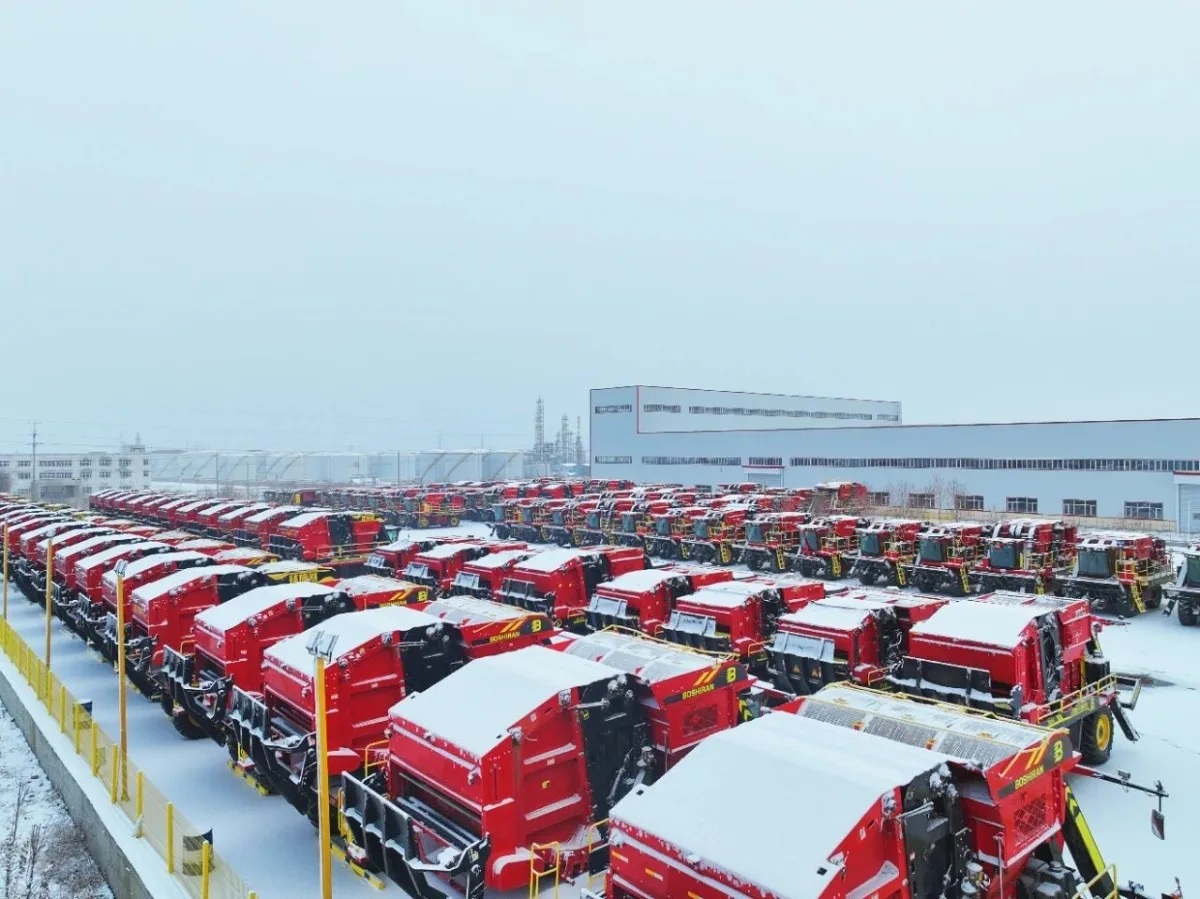
The year 2025, which has just passed, marked the third consecutive year of a downturn in the domestic agricultural machinery market. Both the overall annual revenue from main business and profit levels continued to operate at a low speed, with the industry undergoing continuous restructuring. In 2026, the agricultural machinery market is expected to stabilize and improve, for three reasons: Firstly, due to the continuous low-level operation, the probability of a bottom-rebound increase in most product categories has increased; secondly, the concentrated scrapping and renewal of traditional products in social stock has entered a peak period, and after-market businesses such as second-hand equipment transactions and product lifecycle services are gradually improving; thirdly, technological innovation promotes the upgrading of traditional products, achieving continuous breakthroughs in high-end product areas. Meanwhile, through market cultivation and growth, niche categories such as economic crop machinery, new energy agricultural machinery, and specialized agricultural machinery for hilly and mountainous areas have grown into new growth points, injecting new momentum into market development. Although the overall market is improving, different product categories still experience ups and downs, mainly determined by user and market demand. For example, traditional product markets such as low-end tractors with excess supply will continue to decline, while markets for economic crop machinery and products specifically needed for hilly and mountainous areas, which have rigid demand, still face good growth opportunities.
02 Overseas markets are heating up, but the amount of benefit gained depends on one's capacity.
In 2025, China's global agricultural machinery trade exhibited a distinct trend of "shrinking imports and surging exports," with overseas business emerging as a major highlight for the entire year. Statistics indicate that from January to December 2025, China's cumulative import value of agricultural machinery amounted to 373,165 million yuan, marking a 25% decrease compared to the same period last year. Meanwhile, the cumulative export value for the same period reached 6,741,858 million yuan, representing a 32.3% increase over the previous year. The primary destinations for China's agricultural machinery exports are countries along the Belt and Road, accounting for 60% of the total, with the African market experiencing the fastest growth.
In 2026, the overseas business of agricultural machinery equipment is expected to remain hot, maintaining a good upward momentum. However, we must be clear-headed about it. As we all know, competition in any industry is no different. Fields that are hot naturally have great attraction. Seeing others thriving in certain fields, many people also want to try their luck, but the results can vary greatly. Some make a fortune, while others lose everything. For the overseas business of agricultural machinery products, all agricultural machinery enterprises can try. However, before entering the import and export business field, they must comprehensively consider two key factors based on their own situation: one is how reliable and competitive the products are; the other is whether they have corresponding business operation resources and risk avoidance capabilities. They must act according to their own abilities!
03 Subsidy policies are becoming stricter, with a clear orientation towards providing preferential subsidies to superior machines.
In the development history of China's agricultural machinery market, the national agricultural machinery purchase subsidy policy, which has been in place since 2004, has played an indispensable and crucial role in promoting product promotion and development orientation, effectively driving the market. In terms of management mechanism, the management of agricultural machinery purchase subsidy categories and amounts follows a three-year cycle. The years 2024-2026 represent a new operational cycle. In 2025, there were notable characteristics of stricter and tighter enforcement of agricultural machinery purchase subsidy policies across the country, with nationwide coordination.
In 2026, the continuity of the implementation of the national agricultural machinery purchase subsidy policy is beyond doubt. Features such as "preferential subsidies for superior machines", "some increases and some decreases", and "one large and one small" will be notably prominent. At the level of implementing and executing the subsidy policy, standardization, orderliness, and compliance remain the most basic requirements. All agricultural machinery enterprises must pay attention to changes in national and provincial subsidy policies, fully implement and execute the requirements of the subsidy policy, make genuine efforts to improve product quality and service, standardize subsidy operations, and provide users with higher-quality agricultural machinery products to serve modern agriculture.
04 With the entire industry chain resonating in unison, there is great potential for tackling core technologies and key components.
After years of development, China's agricultural machinery manufacturing industry clusters have fully taken shape, such as the rice machine and rice transplanter production clusters in Suzhou, Jiangsu; the diesel engine production base and tractor industry clusters in Changzhou, Jiangsu; the irrigation and drainage pump industry clusters in Wenling, Zhejiang; the agricultural machinery equipment industry clusters in the hilly and mountainous areas of Jiangjin District, Chongqing; Shenzhen, Guangdong, known as the "Capital of Drones", where over 90% of consumer-grade drones in China are manufactured. Another example is Weifang, Shandong, which is the largest tractor industry cluster in the country; Pangkou, Hebei, with a nationally renowned agricultural machinery parts industry cluster; and Ningjin, Hebei, which has formed a nationally renowned agricultural machinery and tools industry cluster.
In parallel with the development of industrial clusters, China's agricultural machinery component manufacturing is elevating to a new competitive level. Although there are still numerous weak links within the industry, significant strides have been made in core technologies and key component innovations. Both the national and provincial governments have also conducted special research projects to address the weak links in the agricultural machinery industry, achieving remarkable results. For example, domestic breakthroughs have been made in the localization of imported components such as baler knotters, large seeder finger clamps, and hydraulic components for large equipment. Many new technologies and core algorithms have also made breakthrough progress. It can be anticipated that in 2026, the entire industrial chain of the agricultural machinery industry will resonate more strongly and collaborate more closely. There will definitely be more new technologies, processes, and products presented to everyone, driving the continuous progress of the agricultural machinery industry.
05 Driven by technological innovation and the trade-in program, the market development has entered a new stage.
In the current era of rapid technological innovation, the development of the agricultural machinery industry is increasingly exhibiting new characteristics. Whether it is the comprehensive upgrade of power shifting and power steering in traditional agricultural machinery categories such as tractors, or the mature promotion of high-end products such as large-scale silage machines, cotton harvesters, large-scale high-density balers, grain and seed combine harvesters, and sugarcane harvesters, coupled with the increasingly rich emerging categories such as vegetable machinery, garden machinery, and livestock breeding machinery, all serve the modern agricultural system and contribute to a new agricultural production pattern. At the same time, the characteristics of the agricultural machinery aftermarket are becoming more pronounced. Stock renewal and trade-ins are becoming the main growth points of the overall market, especially in the traditional agricultural machinery category market. Iterative upgrades have made agricultural machinery products exhibit more perfect, more advanced, and more intelligent features.
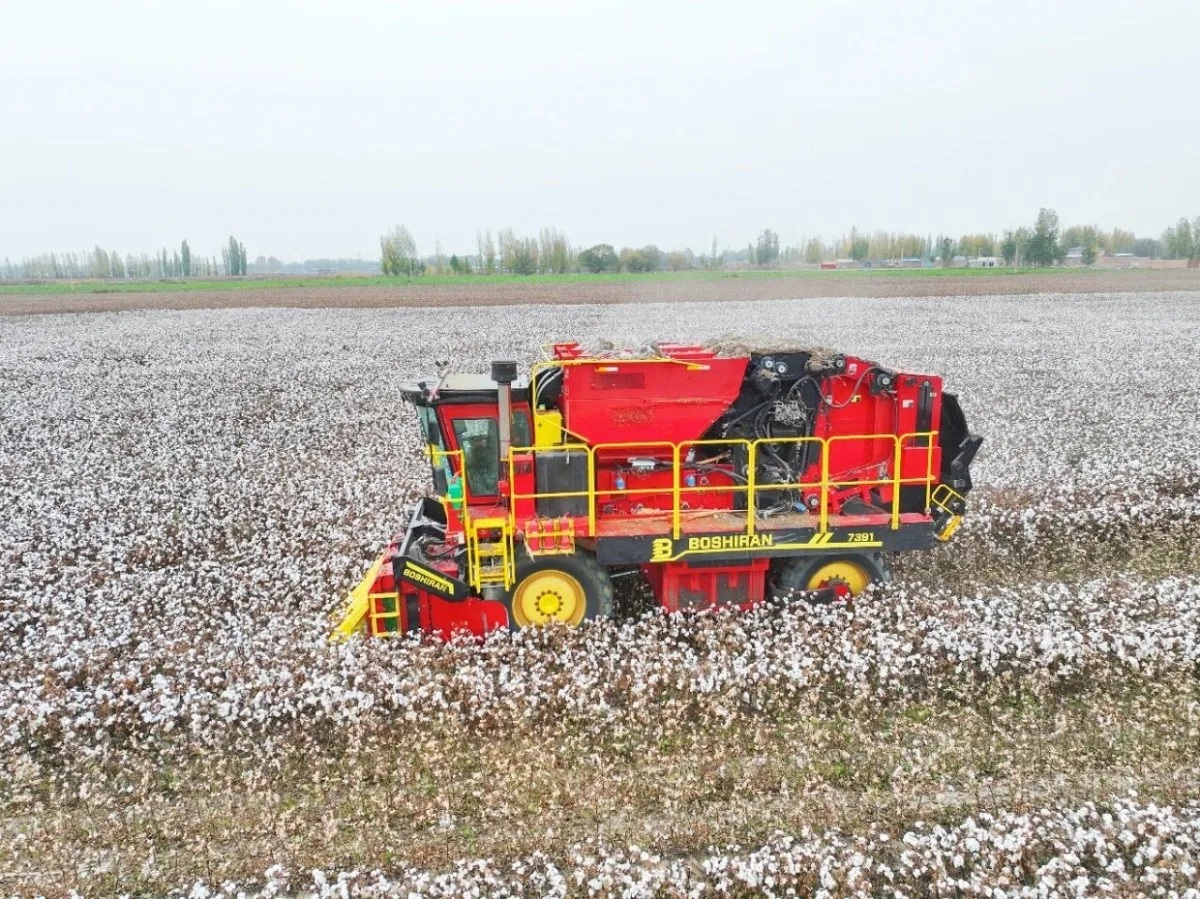
In 2026, emerging specialty products in the agricultural machinery market will continue to attract the attention of users in niche segments, and the innovation and upgrading of traditional products will not cease. In terms of marketing, while ensuring product quality, focusing on the existing market, trade-ins, and user demands will remain key points for agricultural machinery enterprises to win market competition.
With the rise of the livestock industry, the livestock machinery industry is expected to rebound.
In recent years, China's livestock industry has grown from a household sideline to a pillar industry of the agricultural and rural economy. The domestic agricultural planting structure has been continuously accelerating its transition from a dual structure to a ternary structure of "grain crops + cash crops + feed crops," and the pattern of "big agriculture" has taken shape. However, due to factors such as the impact of imported meat products from abroad, the decline in beef and mutton prices, and a significant reduction in farmers' investment confidence, the growth rate of China's livestock industry has slowed down for three consecutive years. Fundamentally speaking, there is a huge gap between China and countries such as Europe and the United States in terms of the level of animal husbandry. According to statistics, the output value of animal husbandry in developed countries worldwide accounts for more than 50% of the total agricultural output value, such as over 60% in the United States, over 70% in the United Kingdom, and 80%-90% in many Nordic countries. Although there are differences in traditional dietary habits between China and Western countries, the demand for meat, poultry, eggs, and milk has been increasing year by year. Therefore, the growth potential of China's livestock industry remains considerable.
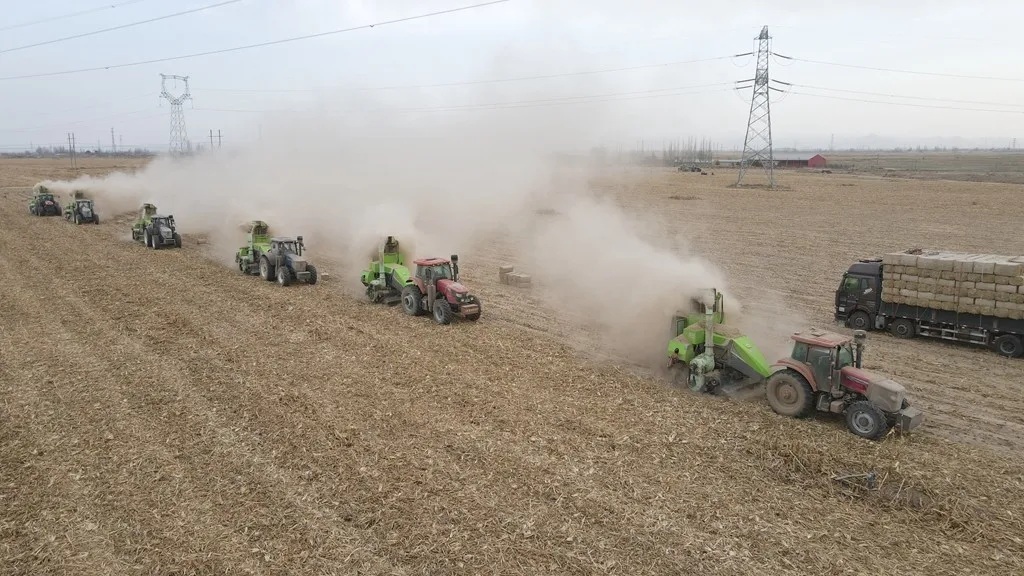
As an indispensable mechanized product in the livestock industry, livestock machinery is playing an increasingly important role. In recent years, China's livestock machinery industry has shown good growth, and the market has accelerated its upward trend. However, influenced by the current cycle of the livestock industry, the livestock machinery market has experienced continuous and significant declines, with 2024 and 2025 reaching new market lows in nearly five years.
Judging by the laws of industrial development, after a continuous market downturn, the probability of a turnaround in the livestock industry in 2026 is increasing. The likelihood of the livestock machinery market resuming cyclical growth is also on the rise, potentially making it one of the industries driving the scale growth of the agricultural machinery sector again.
07 Long-term thinking demonstrates its charm, and product competitiveness determines success or failure.
For several consecutive years, the market for traditional agricultural machinery products such as tractors has experienced a significant downturn, truly testing the viability of relevant agricultural machinery enterprises. Against such a backdrop, not all enterprises have faced an existential crisis due to the market downturn. Instead, a Matthew effect has emerged, where "the good get better, and the bad get worse." For example, leading tractor enterprises such as YTO Group and Lovol have seen their sales increase rather than decrease amidst the overall market downturn. Furthermore, many enterprises specializing in niche products have also achieved good performance. For instance, the tracked tractor manufacturer Nongfu has seen its market sales soar, which is also a typical case of counter-trend growth in brand competition.
Since the agricultural machinery market has entered a comprehensive and intense competition phase, everyone has increasingly recognized the golden rule that the core element of a product determines success or failure. Regardless of the overall market environment, the rise and fall of all enterprises are closely related to "products". The collapse of some complete machine enterprises that rely solely on assembly and lack technical reserves, which we often see, fully illustrates this point. In 2026 and beyond, any agricultural machinery enterprise that wants to achieve substantial development must adopt a long-term business strategy, focus on polishing products, building brands, and cultivating product competitiveness. Enterprises that rely on speculation and making quick money will have less and less room to survive.
08 New media marketing is in its ascendant phase, and the landscape of circulation enterprises is undergoing changes.
The widespread adoption of the Internet has brought disruptive changes to people's lives, permeating every corner. For instance, new media marketing in the agricultural machinery market has achieved rapid growth through the Internet, impacting the sales of traditional brick-and-mortar stores. In the past two to three years, agricultural machinery content e-commerce platforms represented by Tiktok and Kwai have achieved rapid growth in sales of low-priced, micro and small agricultural machinery through the model of "interest recommendation + live streaming sales promotion". This model not only diverts user time and erodes the market share of agricultural machinery, but also poses a serious threat to numerous small and medium-sized brick-and-mortar stores. We often see that many agricultural machinery distribution enterprises that have been operating for many years and solely rely on store operations are facing difficulties due to reduced customer flow, and some have even closed down.
Facing the future, the circulation pattern of the agricultural machinery market will undergo changes, integration, and reshaping due to factors such as advancements in information technology, a younger customer base, and changes in customer consumption habits. For all agricultural machinery circulation enterprises, adhering to innovation while not rejecting it, constantly innovating business models while consolidating their competitive advantages, and keeping up with the pace of the times are essential to achieving long-term success.
The reduction of losses during harvesting, disaster prevention and relief, as well as the applicable and reliable types of agricultural machinery equipment, are hot topics.
It should be said that the bumper autumn grain harvest in 2025 was hard-won. During the autumn grain harvest season, the main producing areas of autumn grain in China, such as the Huang-Huai-Hai region, suffered from severe continuous rainy weather and severe waterlogging disasters. Under such circumstances, agricultural machinery and equipment such as crawler harvesters and grain dryers played an important role. This fully demonstrates that agricultural machinery and equipment are playing an increasingly important role in the modern agricultural system.
In addition to disaster prevention and relief, scientific farming, agronomic improvement, and reducing losses through mechanical harvesting are all crucial aspects of ensuring food security. Agricultural machinery products that are applicable, easy to use, intelligent, reliable, and cost-effective will be preferred and will inevitably become the first choice for users when purchasing. Therefore, in the new year, agricultural machinery enterprises should pay attention to climate and agricultural production needs, provide higher-quality and reliable products and overall solutions for agricultural production, and work together with farmers to build a solid defense line for food security and bountiful harvests.
The market for "one large and one small" models, as well as models suitable for hilly and mountainous terrain and those with special needs, has considerable room for growth.
In recent years, there have been evident signs of the agricultural machinery market developing towards two distinct directions: large-scale and small-scale. This trend is closely linked to market demand and national policy guidance. On the one hand, in open plains, factors such as land circulation, the promotion of conservation tillage practices, and the rise of agricultural (agricultural machinery) cooperative organizations and family farms have contributed to a trend towards larger agricultural machinery products, aligning with the demand for agricultural farming practices. On the other hand, China's hilly and mountainous areas cover approximately 6.636 million square kilometers, accounting for 69.1% of the total land area. Due to the wide variety of crops and scattered land distribution, many regions are still reliant on manual farming practices, constrained by topography. In response to this situation, the country has successively introduced policies, explicitly stating that "promoting mechanization progress in hilly and mountainous areas through subsidies" is a key national support direction. This has attracted the attention of more and more enterprises, accelerating market development.
In 2026, the trend towards larger-scale agricultural machinery products, such as tractors, grain harvesters, and corresponding supporting equipment, suitable for operations on large farms, agricultural reclamation areas, and plain regions, will remain evident. Meanwhile, there is potential for growth in specialized products such as small-scale harvesters, micro-tillers, and crop protection machinery, suitable for operations in hilly and mountainous areas, which deserve attention.