
Observation of Tractor Efficiency Intelligence and New Energy Revolution at Hanover Agricultural Machinery Exhibition
At the Hanover International Agricultural Machinery Exhibition in Germany, the temple of global agricultural machinery, although the total number of tractor companies participating may seem streamlined, what is displayed here is undoubtedly the top technological strength and cutting-edge development trends of the global agricultural machinery manufacturing industry. Unlike some exhibitions that rely on quantity to win, Hannover Fair has a very high threshold. It values quality and depth, and is a barometer that will lead the industry for the next five to ten years. At the 2025 exhibition, tractors, the "king of power" that has stood firm since the beginning of agricultural mechanization, will still be the undisputed protagonist.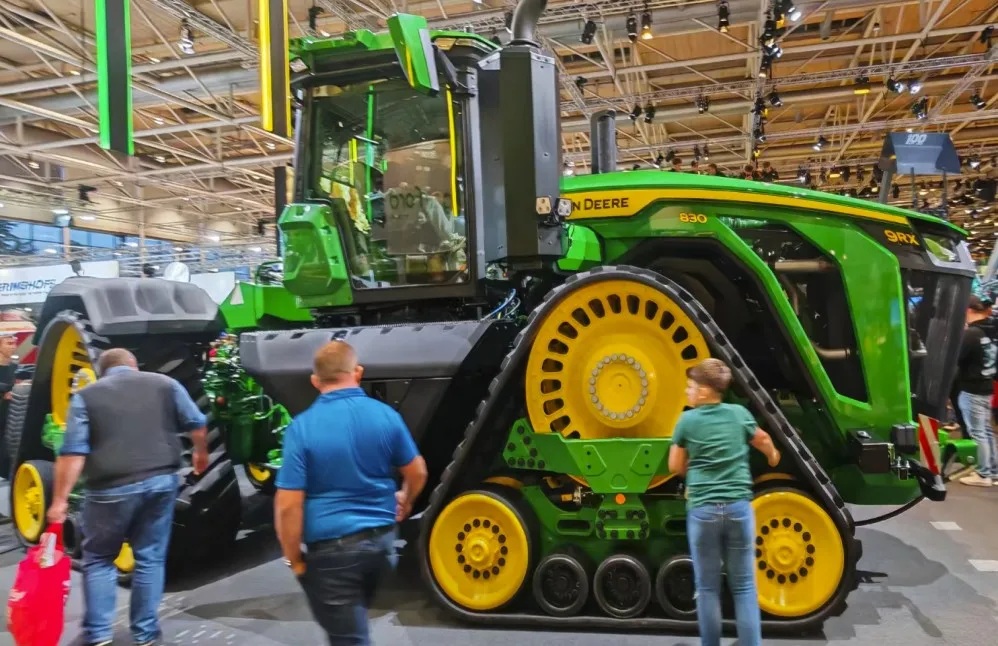
Despite all calculations, there were no more than 25 tractor brands participating in the exhibition, including John Deere, Case New Holland, and AGCO CLAAS、 Doiz and other European and American giants, as well as a few representative enterprises from India, China and Türkiye, but it is the collective appearance of this "elite camp" that clearly outlines a profound transformation picture that the tractor industry is experiencing: the ultimate pursuit of efficiency, the multiple revolution of power and the systematic leap of intelligence.
1、 The trend of horsepower upgrade remains unchanged, and efficiency remains the core competitiveness
In the foreseeable future, the role of tractors as the core engine of agricultural power remains unbreakable. It provides powerful power for thousands of types of agricultural machinery, and its power directly determines the scale and efficiency limit of agricultural production. Looking back at previous Hannover exhibitions, a timeless theme is the continuous increase in tractor horsepower. Even John Deere, which claims to provide comprehensive agricultural solutions, still has its core competitiveness rooted in tractor products, and its core selling point is nothing but "high power and efficiency". This trend was fully demonstrated at the exhibition in 2025.
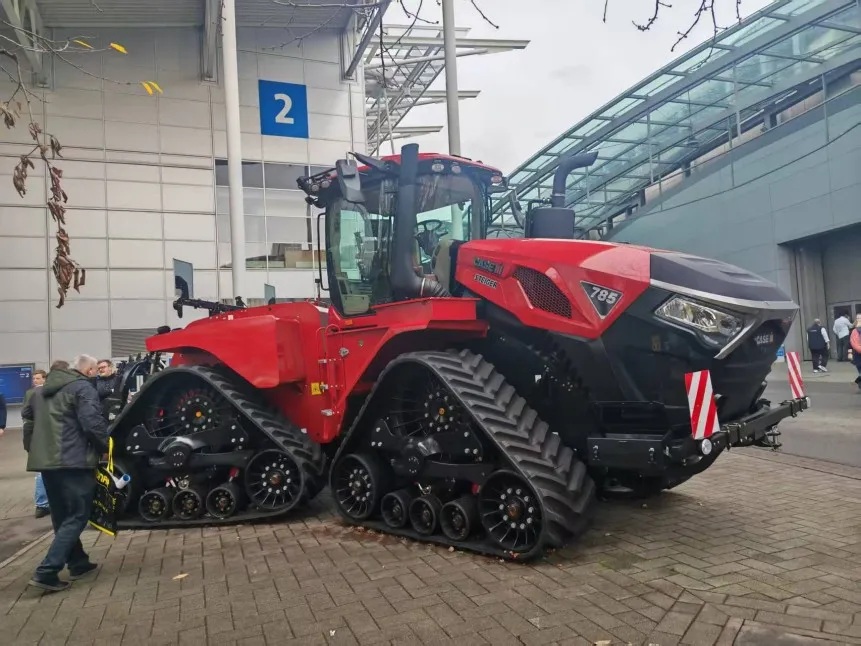
John Deere, the global leader in agricultural machinery, has unveiled its flagship product - the 9RX 830 four track tractor, with a power of over 800 horsepower. This not only breaks John Deere's own record, but also once again touches the horsepower ceiling of mass-produced tractors worldwide, demonstrating its unbeatable technological leadership position. Kaisen Netherlands handed over its high horsepower to the Kaisen brand and showcased the Steiger 785 Quadtrac tractor, which also uses a four track folding waist articulated design, to cope with the most extreme operating conditions with its powerful 785 horsepower performance. The Class, which has the advantage of home turf, has brought the new Axion 900 series tractor with 500 horsepower. FENDT, known as the "Mercedes Benz of the Tractor Industry," has comprehensively upgraded its product line with new 800 series and 900/1000 series subdivisions, all breaking through the traditional threshold of 450 horsepower and moving towards a new era of 800 or even 1000 horsepower.
Behind this horsepower race is not a fierce competition among enterprises, but a direct reflection of the structural changes in global agriculture. The process of urbanization on a global scale is irreversible, and the continuous migration of agricultural population to cities has led to an increasingly severe shortage of agricultural labor, making "machine for human" an option a necessity. At the same time, land transfer and centralized management have become mainstream, and large farms and agricultural cooperatives require more efficient equipment to complete large-scale operations within limited farming hours. The continuous improvement of tractor horsepower is precisely to meet the core demand of large-scale and intensive agriculture for "higher output per unit time and per unit area". Therefore, the Hanover exhibition clearly tells us that efficiency has been, is, and will continue to be the unshakable core competitiveness of tractors in the visible future.
2、 Dynamic Innovation: Diversified Technological Pathways Advancing Together
If the increase in horsepower is the "linear evolution" of tractor development, then the transformation of power sources is a "paradigm revolution". In the past two years, whether it is a top-level global exhibition or a regional exhibition, "new energy agricultural machinery" has become a hot term that cannot be ignored. At the Hanover exhibition in 2025, the power system of tractors completely bid farewell to the situation of diesel engines dominating the world, presenting a diverse pattern of various technological paths such as pure electric, hybrid, methane, methanol, hydrogen, etc., blooming and exploring together.
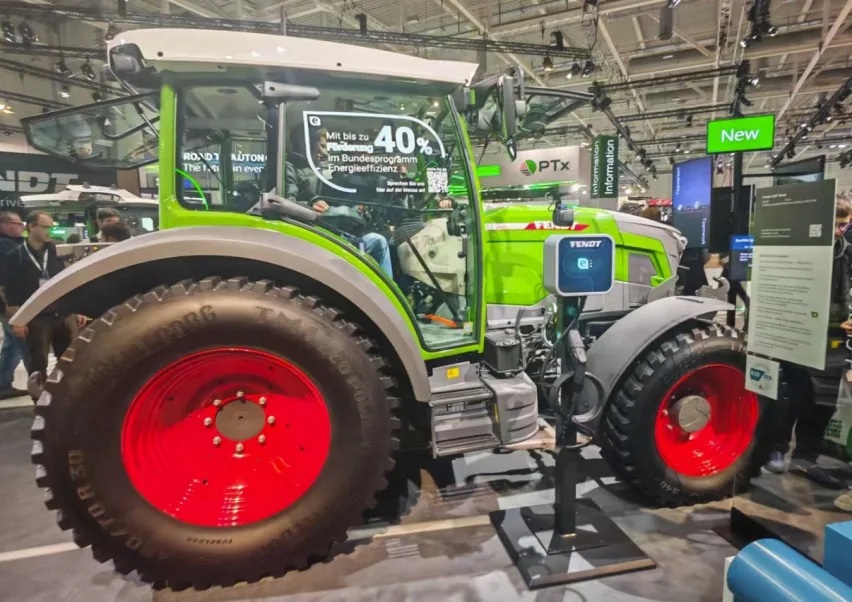
Pure electric tractors are moving from concept to practicality. The 130 horsepower pure electric tractor exhibited by John Deere is no longer a laboratory prototype, but a mass-produced model with a clear commercialization schedule - planned to be put into production in 2026 and achieve large-scale sales by 2030. Germany's Fantawild has brought its upgraded E107 pure electric tractor, which has undergone nearly a decade of iterations. This product has been validated for a long time in specific scenarios such as vineyards in Europe and has officially entered the commercialization stage. In addition, pure electric products such as T16.20 from German company Tadus and E1000 from Chinese company Weichai Lovol are also competing on the same stage, marking that the wave of electrification has swept into the fields.
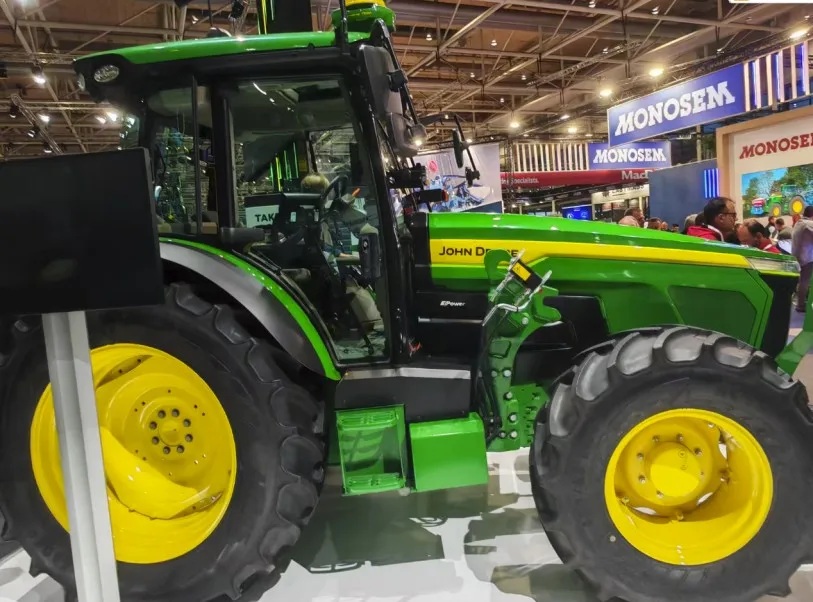
In contrast, European and American companies have shown a stronger interest in alternative fuel tractors such as methane and methanol. Behind this, the EU's policy orientation of providing higher subsidies for gas tractors is indispensable. The T7.270 methane powered tractor exhibited by New Holland Company has become a star product in the industry, attracting attention for its mature technology and significant emission reduction effects. JCB company took a different approach and showcased methanol powered tractors. It is worth noting that giants such as Deere, CNOOC Netherlands, and Fantawild have successfully developed hydrogen and ammonia tractors, but have not publicly showcased them at this exhibition. This' hidden clumsiness' behavior precisely reveals that hydrogen and ammonia power still face huge challenges in storage and transportation, infrastructure, and cost, and there is still a long way to go before large-scale commercialization.
An interesting phenomenon is that, in contrast to the booming hybrid technology at domestic exhibitions, hybrid tractors were almost absent from the Hanover exhibition. Except for a few exhibits such as Zoomlion's DV3504 and India's TAFE's EVX75, mainstream European and American brands have not focused on it. The reason behind this is that European and American companies have reached the pinnacle of traditional transmission systems. Their mature power shifting and continuously variable transmission (CVT) technology have achieved extremely high transmission efficiency and precise power control, which to some extent undermines some of the advantages of hybrid technology in energy efficiency improvement. Therefore, they are more inclined to allocate research and development resources towards more disruptive pure electric or alternative fuel routes.
From the Hanover exhibition, it is clear that the global tractor industry is standing at a crossroads full of uncertainty. Not only are Chinese companies catching up, but even century old giants like John Deere and Case New Holland are also deeply entangled in the dilemma of choosing their technological path. They are not willing to easily give up the technological barriers and industrial chain advantages built over a century on traditional fuel tractors, but also afraid of being abandoned by the times in the disruptive wave of new energy. So, we have seen the most "safe" and "luxurious" strategy - a diversified technology layout of "both need and need", which has become a common choice for giants to deal with an uncertain future.
3、 Intelligent Upgrade: From Single Machine Intelligence to Intelligent System Management
For the future of tractors, intelligence may be a more decisive development trend than new energy. In the future, regardless of whether the energy source driving the tractor is diesel, electricity, or hydrogen, intelligence will become an indispensable "basic function", just like the "oil electricity intelligence" concept advocated by the Chinese passenger car market. At the Hanover Exhibition in 2025, the level of intelligence demonstrated by European and American giants has already widened the intergenerational gap with Chinese and most other countries' enterprises.
Firstly, advanced autonomous driving has become a standard feature for high-end tractors. L3-L4 advanced auto drive system is generally installed in front of high-end models of John Deere, Case, Fent and other brands. This means that the tractor can not only drive automatically along the preset route, but also achieve complex field full process autonomous operation: automatic recognition of the ground, automatic precise turning, automatic management of the lifting and landing of agricultural tools, and even autonomously plan safe detours when encountering unexpected obstacles. The role of a farmer is transitioning from a driver to an administrator.
Secondly, the deep integration of artificial intelligence and computer vision has given tractors a "smart eye". The tractors and combine harvesters exhibited by companies such as John Deere are equipped with advanced sensor kits that integrate cameras, radar, and LiDAR. The AI system can analyze the data collected by sensors in real time, identify the growth of crops ahead, distinguish weeds from crops, diagnose pests and diseases, and cooperate with rear mounted agricultural machinery in real time to adjust tillage depth, sowing density, fertilization amount or spraying strategy, achieving precise and variable operations of "seeing and processing".
Ultimately, the ultimate goal of all these intelligent technologies is unmanned and autonomous system management. The 'one click field' homework is shining from dreams into reality. Farmers only need to delineate the work area and select the type of work on the digital map on their office computer or tablet, and the tractor can autonomously complete the entire process from hangar deployment, field work to returning after the task is completed. The intelligent connotation of tractors has evolved from early pursuit of single machine automatic navigation and assisted driving to being a mobile intelligent terminal for the entire smart agriculture system.
Tractors, once known as' power islands', have now become the most important field data collectors. The massive data collected in real-time, including soil moisture, crop growth, and yield distribution, will be seamlessly uploaded to farm management software (such as Climate FieldView, myJohnDeere, etc.) through the cloud. After being analyzed and processed by cloud AI, an optimized job "prescription map" is generated to guide the next season's production, and then sent back to the tractor for execution. As a result, a smart agriculture closed-loop management system of "data collection AI decision-making precise execution effectiveness feedback" has been formed, in which tractors play a core hub role as a link between the past and the future.
4、 New form of tractor: breaking and standing of century old structure
Since the first steam tractor was introduced in 1868, the basic form and structure of tractors - the longitudinal layout with front engine, center cab, and rear power output shaft - have hardly undergone revolutionary changes for 157 years. The formation of this structure originated from the expensive and complex power systems of the steam age and fossil fuel age. According to the principle of "division of labor to improve efficiency" in industrialization, separating the power source (tractor) from the work tool (agricultural machinery) became the optimal solution.
However, with the arrival of the era of electrification, multi energy, and intelligence, the design concept, form, and function of tractors are undergoing a "once-in-a-century big change". The Hanover Exhibition in 2025 provides us with a window to glimpse this transformation.
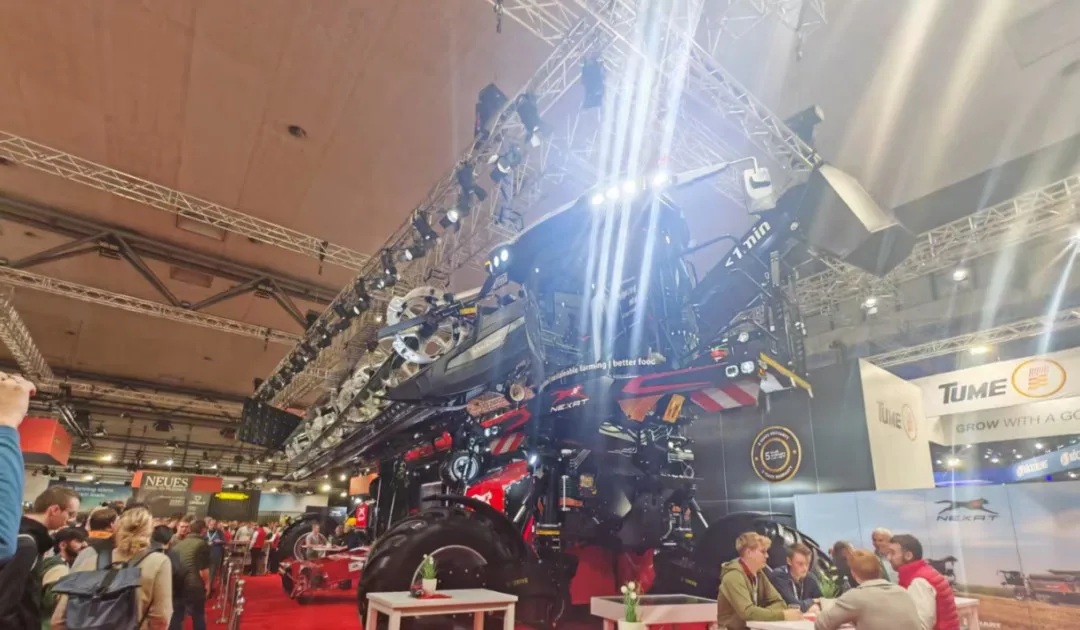
The most eye-catching one is the horizontal beam installation platform of NEXAT company in Germany. This behemoth worth up to 20 million yuan is essentially a completely disruptive new form of tractor. Its revolution lies in two aspects: firstly, the structural change, shifting from the traditional vertical layout of tractors to a horizontal layout spanning across fields; The second is the change in power, from a centralized single power source to a distributed power design on both sides. This structure brings unprecedented operational efficiency, with a maximum sowing width of up to an astonishing 29 meters, far exceeding traditional agricultural machinery and extremely suitable for the operational needs of large-scale farms. The modular design of NEXAT enables it to quickly switch between different agricultural tools, achieving full mechanization from tillage, planting, management, and harvesting. It showcases a new, system level agricultural operation paradigm.
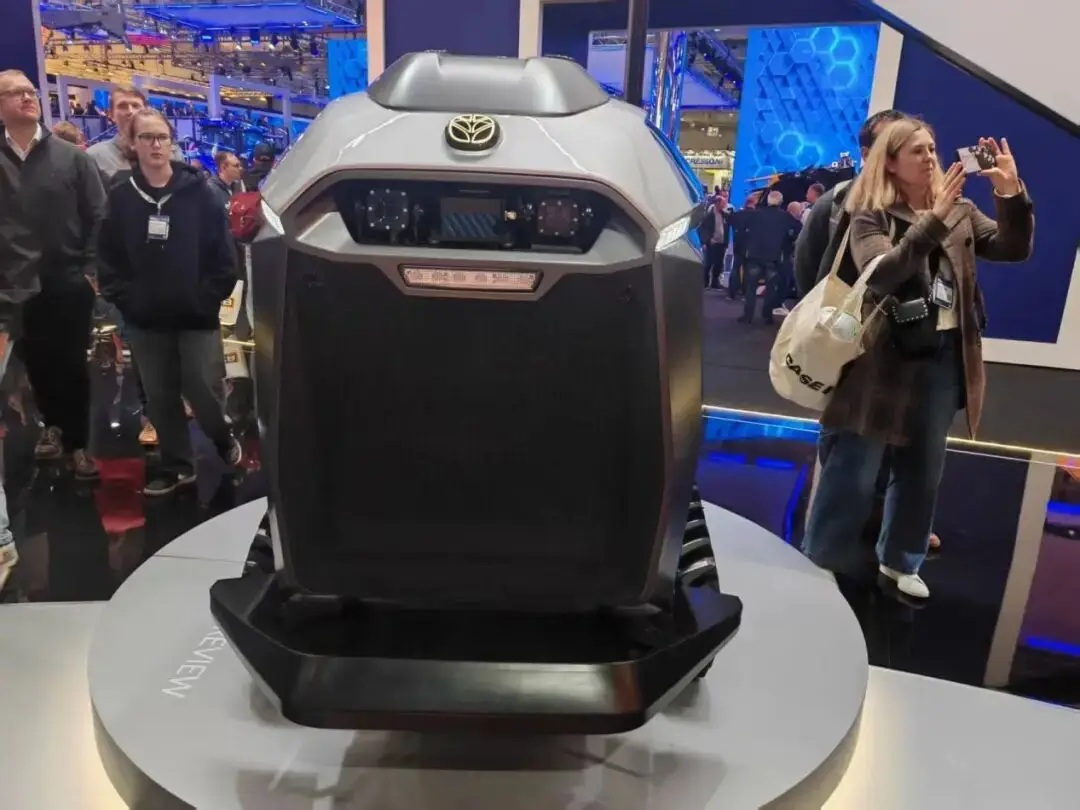
The XAVER power platform from German company Fantawild represents another path of innovation. It has to some extent continued the longitudinal arrangement of traditional tractors, but has undergone a deep reconstruction in terms of product structure, center of gravity distribution, and connection form with agricultural machinery. It can be understood as a highly integrated and intelligent "power cube", which can achieve more reasonable power distribution, higher operational efficiency, and better economy for small and medium power load operation scenarios.
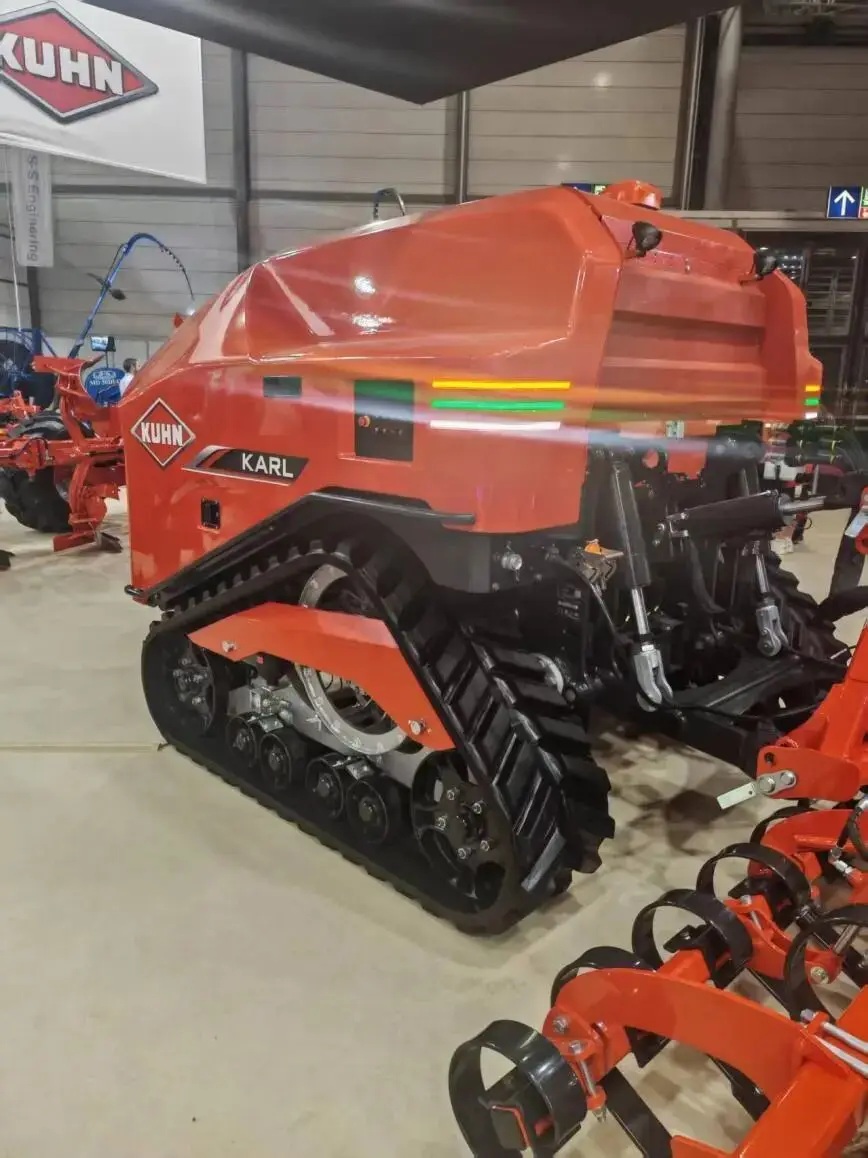
In addition, new forms of products such as the KARL unmanned tractor and AGXEED T7 from Kuhn in France also made their debut at the same time. But overall, NEXAT's horizontal platform and Fantawild's XAVER have brought the strongest impact on concepts and industry shock. They all foreshadow the beginning of a new era: when power becomes modular and electrified, when intelligent systems take over control, it's time for tractors, a classic form that has lasted for 157 years, to break out of their original framework and enter a brand new, imaginative lifecycle.
Summary:
Through the tractor exhibition area of the Hanover Agricultural Machinery Exhibition in 2025, we see not only steel giants, but also a condensed picture of the future development of global agriculture. Efficiency, intelligence, and new energy, like the "three horses" driving the industry forward, are leading the tractor industry towards an unprecedented new era.
The revolution of power has already begun, with diversified technological routes competing and integrating in exploration. No one can easily assert the ultimate winner. For Chinese agricultural machinery enterprises, the Hanover Exhibition is a mirror that reflects the gap between our basic technology, system integration, and forward-looking layout and the international top level; It is also a lighthouse that points out the direction of global agricultural machinery technology evolution.