
2025 Tractor Industry Review: Trapped in a Slump, Facing Fragmented Competition, and Embracing Technological Diversity
Tractors, akin to the "mother machine" of thousands of agricultural machinery, occupy a core position akin to an aircraft carrier in the agricultural mechanization system. They are not only the driving force for farmland operations but also serve as a bridge between traditional agriculture and modern smart agriculture. The level of development of tractor technology in a country directly reflects the depth and breadth of the overall process of agricultural mechanization in that country. As the "leader" and "locomotive" in the field of agricultural machinery, the rise and fall of the tractor industry directly affects the prosperity and decline of the entire agricultural machinery industry chain.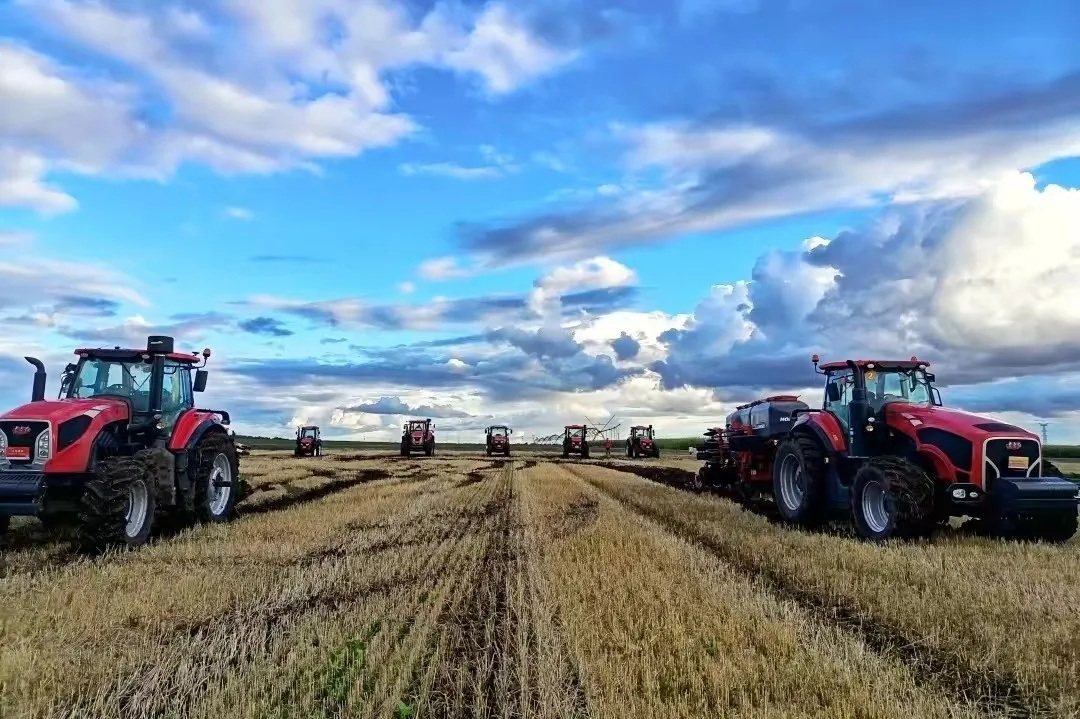
In 2025, the domestic agricultural machinery industry stood at a pivotal juncture of transformation and upgrading. Amidst the increasingly complex global food security situation and the accelerated advancement of domestic agricultural modernization, the development trend of the tractor industry garnered particular attention. That year, the industry sought structural optimization amidst the throes of declining sales, explored technological breakthroughs under policy guidance, and reshaped the market landscape amid fierce competition. This article, based on detailed data and in-depth analysis, provides a comprehensive overview of China's tractor industry in 2025, revealing its development trajectory and future trends.
1. Industry sales: dual variations of inertial decline and structural optimization
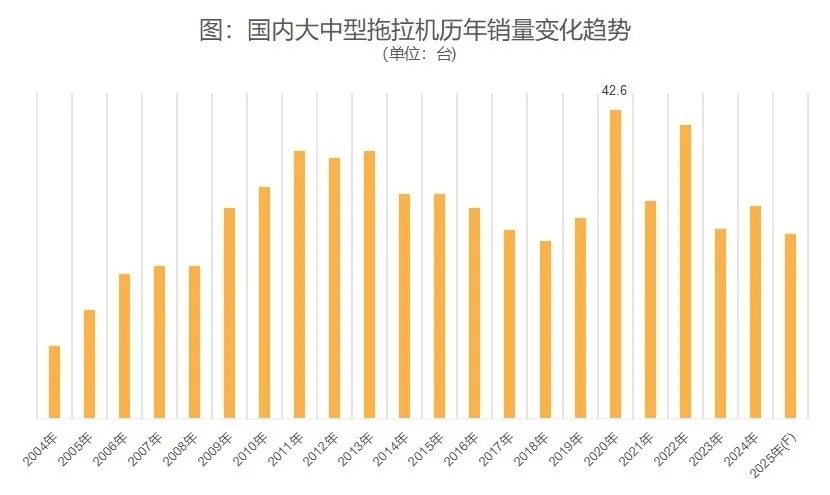
According to public data from the agricultural machinery purchase subsidy system, as of November 30, 2025, 225,000 large and medium-sized tractors had been sold domestically through the subsidy system, a decrease of 20% compared to the 280,000 units sold in the same period last year. The decline exceeded the expectations of many enterprises. It is estimated that the total sales for the year will reach the level of 250,000 to 270,000 units. In the last month, enterprises will conduct large-scale year-end promotions to clear inventory and boost performance, which is expected to significantly boost the overall sales of the industry. Coupled with the bountiful harvests in the three northeastern provinces, Inner Mongolia, and Xinjiang this year, farmers have a high enthusiasm for purchasing machines. With favorable policies at the end of the year, many users who have not purchased machines in the past three years will take advantage of the year-end promotions to make purchases. Therefore, there is a potential for a small peak in machine purchases at the end of the year. However, in any case, the decline in the tractor industry in 2025 is an indisputable fact.
Since the inception of the subsidy policy in 2004, 6 million large and medium-sized tractors with a power of over 25 horsepower have been sold domestically over the past 20 years. When ranking the sales volume of tractors over these 20 years, it can be observed that the data exhibits characteristics of a normal distribution, perfectly demonstrating the complete industrial cycle of the tractor industry from its cultivation period, growth period, stability period to decline period. The figure of 250,000 to 270,000 units is on the lower side. Excluding the influence of special factors such as subsidy policies and emission policies, the normal demand for tractors in the domestic industry should be 280,000 to 300,000 units. The data fully indicates that the tractor industry is in a trough in 2025. "Under an avalanche, no snowflake is innocent!" The reason for this result is undoubtedly related to the industry cycle, as well as the continuous overdraft of future demand by enterprises.
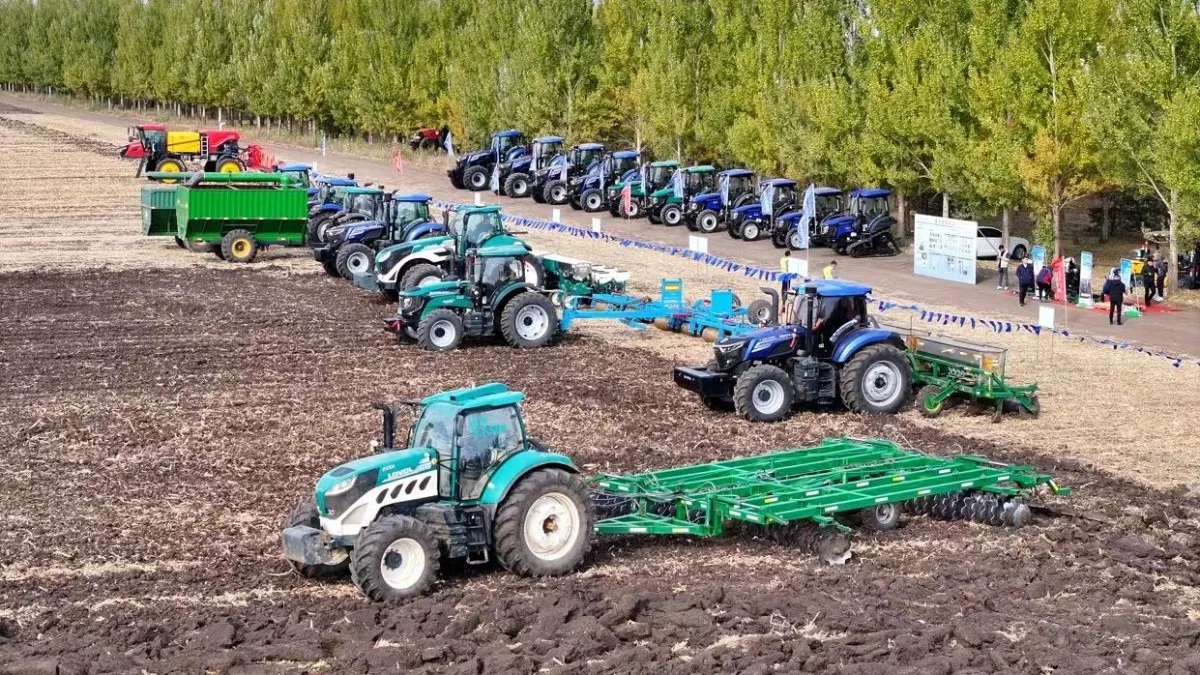
According to data from the National Bureau of Statistics, over the past five years, the proportion of large-scale tractor production in China has continued to rise, while the production of medium-sized tractors has shown a downward trend. Specifically, from January to December 2024, the production of large-scale tractors was approximately 111,833 units, with provinces such as Shandong, Henan, and Jiangsu having a higher proportion. Meanwhile, the production of medium-sized tractors was approximately 236,537 units, a year-on-year decrease of 16%, with Shandong Province accounting for 45.1% of the production. These data indicate that the market share of large-scale tractors is gradually replacing that of medium and small-sized tractors.
It is important to pay attention to both the total sales volume of tractors and the sales structure, as "the devil is in the details". By analyzing the sales changes of the two major sub-categories of large and medium-sized tractors over the past nine years, we can see that since 2017, the proportion of large tractors with 100 horsepower and above has been continuously increasing. In 2024, some enterprises artificially reduced the market share of large tractors by focusing their product models below 90 horsepower on 50 and 70 horsepower models in order to comply with the National IV emission standards. However, data from January to November 2025 shows that the market share of large tractors has continued to increase.
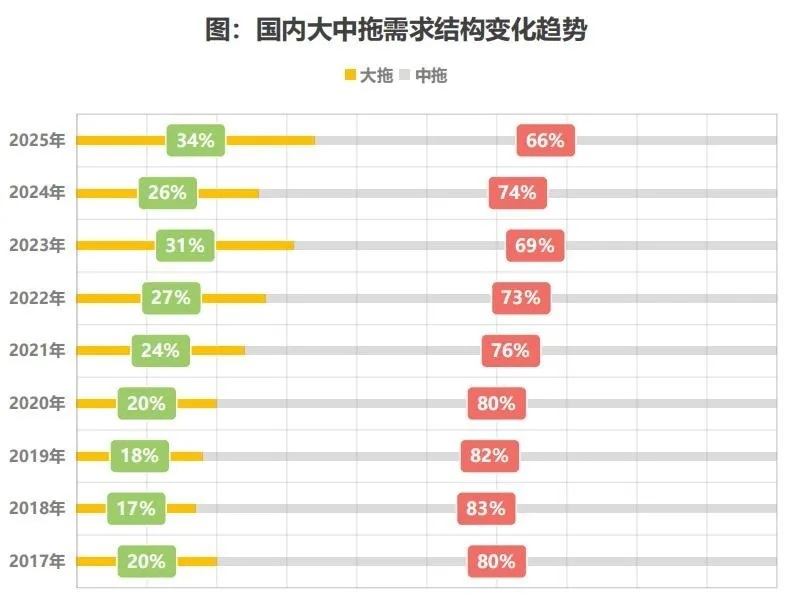
The mysterious force behind data changes lies in the advent of large-scale agriculture and the era of organized users. Since 2009, the country has implemented policies such as large-scale land circulation, promoting the construction of high-standard farmland by 2018, and land trusteeship measures after 2020. These policies collectively facilitate large-scale agricultural production. Large-scale production is primarily driven by organized users, who have a strong demand for large, efficient, and complete sets of agricultural machinery. For instance, the subsidy policy for the purchase and application of agricultural machinery places special emphasis on the introduction of high-performance seeders, intelligent high-speed rice transplanters, and other equipment, supporting independent purchases and implementing a "purchase first, subsidy later" model. These measures not only enhance the yield and quality of major crops but also elevate the level of agricultural mechanization, reflecting support for the intelligence and modernization of agricultural production. The changes in the demand structure for domestic tractors reflect the shifts in the level of large-scale production and user structure.
II. Subsidy Policy: Policy Wisdom for Precise Guidance and Structural Optimization
2025 is the second year of the implementation of the new three-year subsidy policy, which generally follows the general principles of "preferential subsidies for excellent machines", "adjustments with both increases and decreases", and "one large and one small". However, there were some special circumstances in that year:
Firstly, for small and medium-sized tractors with large holdings and outdated technology, the principle of controlling the subsidy proportion within 15% within three years will be strictly implemented. Xinjiang local governments, the Production and Construction Corps, Heilongjiang Agricultural Reclamation, Hubei, Shanghai, Guangxi, and Guangdong have also implemented a "phase-out" policy for small-horsepower tractors, meaning that no subsidies will be provided. It is expected that more provinces and cities will implement a "phase-out" policy for small and medium-sized tractors with saturated demand in the later stage.
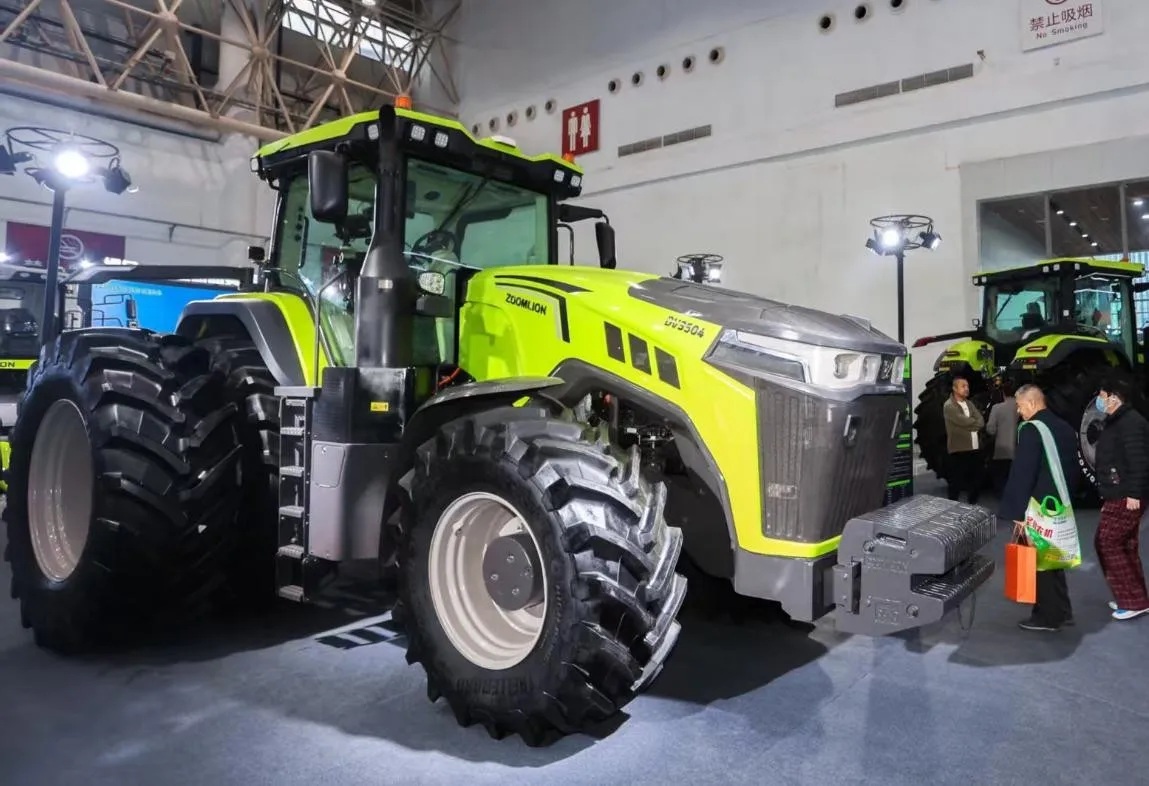
High subsidies for smart tractors. According to the "List of Maximum Subsidies for Central Financial Funds for General Agricultural Machinery in China from 2024 to 2026 (Public Notice)", published by the General Station of Agricultural Mechanization of the Ministry of Agriculture and Rural Affairs, the new three-year agricultural machinery subsidy policy clearly favors power-shift tractors with advanced technology. For example, for a 200-horsepower power-shift model, the subsidy amount can be 33,600 yuan higher than that for a traditional mechanical shift model, while the subsidy amount for a power-shift plus intelligent control model is 36,100 yuan higher.
Special policies have been formulated locally for continuously variable transmission (CVT) tractors. For example, Jiangsu Province, Anhui Province, Xinjiang Uygur Autonomous Region, Tianjin City, and Gansu Province have provided subsidies of 200,000 yuan and 175,000 yuan respectively for hydraulic mechanical CVT tractors and hybrid CVT tractors with 200 horsepower and above. Such large-scale and high-standard subsidies have stimulated the enthusiasm of tractor enterprises for technological upgrading. According to the China International Agricultural Machinery Exhibition held in Wuhan in October 2025, more than a dozen domestic tractor enterprises have the ability to provide CVT and hybrid tractors to the market.
The highly anticipated "dual subsidy" for scrapping and renewal has been launched. Since 2024, the state has prioritized the scrapping and renewal of old agricultural machinery. Shandong Province has responded to this policy by providing support to farmers and agricultural production and operation organizations engaged in agricultural production. After scrapping old tractors with a power of 20 to 35 horsepower, farmers can receive a scrapping subsidy of 3,300 yuan per unit (a 50% increase compared to 2024). At the same time, newly purchased large and medium-sized tractors can continue to enjoy the central and provincial purchase subsidies of the current year. The combination of these two subsidies can increase the actual income of a single unit by up to 5,000 to 8,000 yuan.
Special subsidies are provided for models urgently needed in local areas or for use in special scenarios. For example, crawler tractors can enjoy a subsidy amount 10% to 20% higher than wheeled tractors within the same horsepower range. After continuous rain and waterlogging in the Huang-Huai-Hai region, some localities provide subsidies to support crawler tractors, crawler harvesters, and crawler transport agricultural machinery.
Of course, there is also the "application subsidy" linked to the volume of operations. Some regions are implementing subsidy policies for large intelligent tractors with a power of 100 horsepower or more and equipped with information monitoring conditions. The subsidy is paid in two installments: 70% upfront, and the remaining 30% after the stipulated volume of operations is achieved in the second year. If the annual volume of operations is continued in the third and fourth years, an incentive subsidy of 10% and 10% will be given respectively, which means that a maximum of an additional 20% of the original subsidy can be obtained.
It can be seen that according to the agricultural machinery subsidy policy in 2025, the subsidies for tractor products will focus on "preferential subsidies for superior machines", that is, priority will be given to subsidizing advanced models that are efficient, energy-saving, and environmentally friendly. Products of different horsepower ranges and different technological routes will receive varying degrees of subsidies based on their performance and applicability. Some special categories and models used in special scenarios will receive special attention, in order to promote the optimization and upgrading of agricultural machinery and enhance agricultural productivity.
III. Technical route: Coexistence of multiple technologies and the sudden emergence of hybrid power
For the tractor industry, the complexity of technology and the diversification of technological paths have become prominent features in 2025, which has also led tractor companies into a dilemma of technological confusion and path selection.
From an overall perspective, in 2025, the tractor industry will feature multiple technological routes, including sliding gear shifting, synchronizer shifting, power shuttle, power shifting, CVT, hybrid power, pure electric, methanol and methane clean energy, etc. This will pose great difficulties for enterprises when making choices and decisions.
From the perspective of technological upgrading, synchromesh tractors are evolving towards power shuttle tractors in 2025. It is estimated that 25,000 power shuttle tractors will be sold domestically throughout the year, but the market share is mainly concentrated in a few enterprises such as Weichai Lovol and YTO Dongfanghong. According to inquiries, many tractor enterprises have obtained certification, and it is expected that hundreds of power shift tractor models will be launched in 2026.
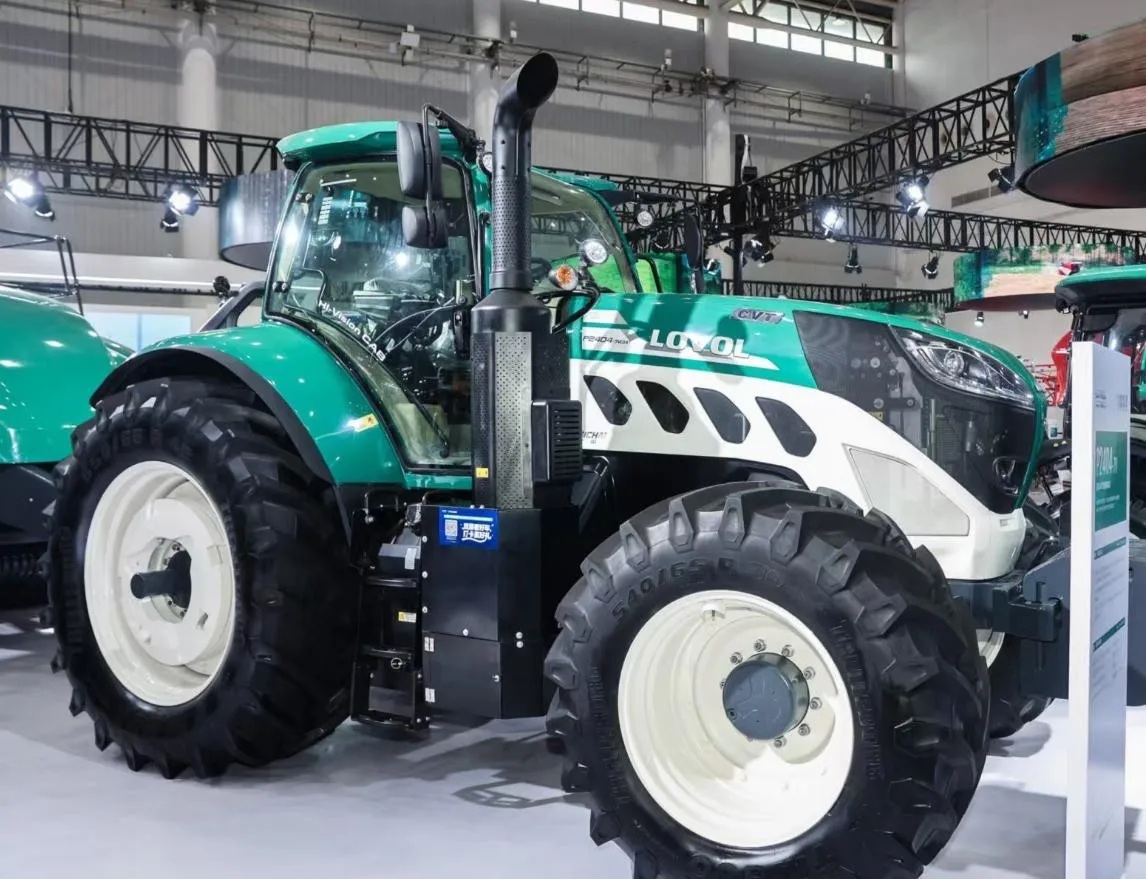
From the perspective of technological breakthroughs, the most commendable achievement in 2025 is the breakthrough made by domestic tractor enterprises in the two top technological fields of power shift and CVT. At the recent Wuhan China International Agricultural Machinery Exhibition, about 10 domestic tractor enterprises, including China YTO Group Corporation, Weichai Lovol, and Dongfeng Agricultural Machinery, showcased their power shift tractor technology, including the UP4004 and HP2804 full power shift tractors exhibited by Haodi (Jiangsu) Intelligent Equipment Technology Co., Ltd., a subsidiary of Yangzhou Jinshiji. These technologies demonstrate that Chinese agricultural machinery enterprises have mastered top-notch power shift technology that is on par with international mainstream brands such as Case IH, including HI-LO, regional power shift, and full power shift technologies. This marks significant progress in the field of power shift technology for Chinese agricultural machinery enterprises, providing users with diverse choices, and also indicating that the technical challenges that once plagued Chinese agricultural machinery enterprises have been effectively resolved.
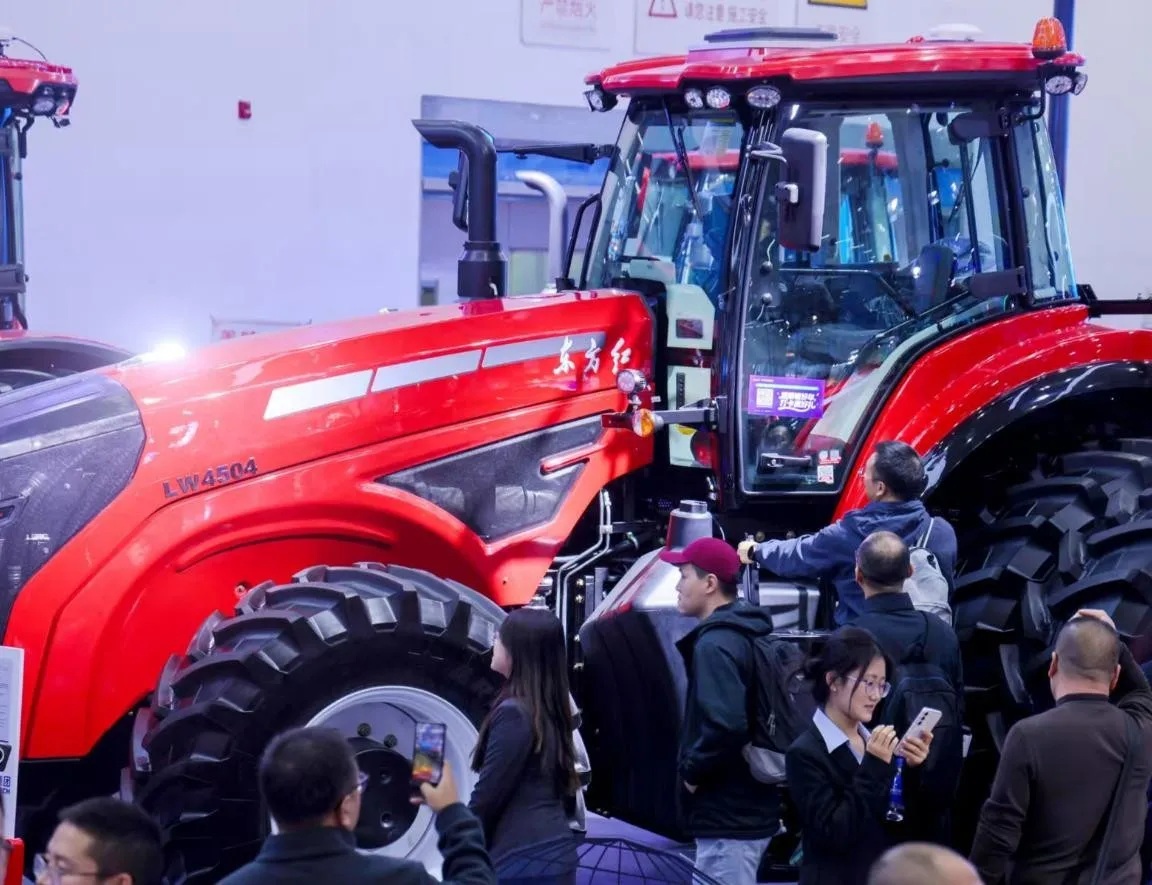
The CVT technology, which is considered the pinnacle of tractor transmission systems, has also seen breakthroughs. YTO Group exhibited the LW4504, Weichai Lovol showcased the P7000 series of infinitely variable speed tractors, and tractor companies such as Luzhong and Junmadao also exhibited CVT tractors. This indicates that the breakthrough in domestic CVT technology is not limited to just one or two companies, but rather exhibits a characteristic of technological diffusion, with multiple companies like YTO Group and Weichai Lovol making significant progress in CVT technology.
Of course, the hottest product in 2025 will definitely be hybrid tractors. After Jiangsu Province announced a subsidy of 175,000 yuan for hybrid tractors with a power output of 200 horsepower or above, the enthusiasm of tractor companies was instantly ignited. In April, the General Station of Agricultural Mechanization of the Ministry of Agriculture and Rural Affairs organized a field test and verification event for "new energy and high-end intelligent tractors" in Emin, Xinjiang, further stimulating the enthusiasm of enterprises. According to information obtained from the Wuhan conference in October, most of the top 20 tractor companies in domestic sales have either launched hybrid tractors or completed technical reserves. Several leading enterprises will be the first to enjoy the technological dividend. After 2026, a large number of tractor companies will enter the hybrid tractor market, and the industry competition hotspot will shift from power shuttle to hybrid power.
Overall, the technological trajectory of the domestic tractor industry in 2025 is intricate and complex, leaving enterprises in a dilemma of choice. Major players like YTO Group and Weichai Lovol have opted for a diversified and parallel technological path, while second- and third-tier brands are either betting on power-shifting or power-shifting gearboxes, or on hybrid and pure electric powertrains. Enterprises are torn between concerns about incurring additional costs and the fear of missing out on technological dividends, thus finding themselves in a state of confusion and passivity.
IV. Competitive Landscape: Dual Hegemony and Echelon Reconstruction
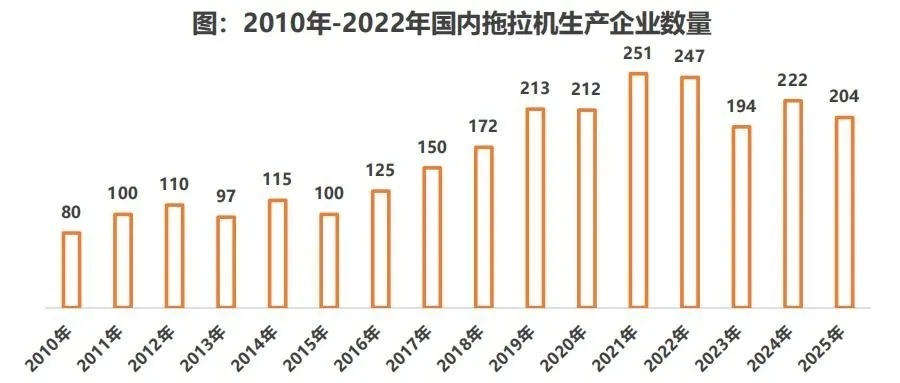
Surprisingly, despite the tractor industry entering a downturn and remaining sluggish for three years, the number of domestic tractor enterprises still exceeds 200, and new brands are still emerging in 2025. However, the industry reshuffle that has been called for years has not been significant. According to sources, in 2026, oligopolies from the construction machinery, automotive, and other industries may enter the tractor industry, indicating that the tractor industry still holds great appeal.
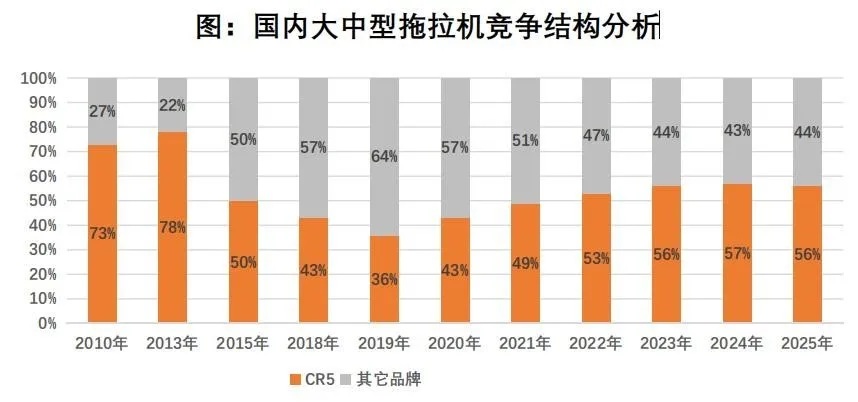
In recent years, China's tractor market has undergone significant structural adjustments, with sustained robust demand for high-power tractors. The ownership of tractors with a power output of over 100 horsepower has increased by 25.47%, with an average annual growth rate exceeding 8%. This trend indicates that the market is gradually shifting towards larger and more efficient models. Domestic tractors have made breakthroughs in high-end technology, especially in the power range of over 250 horsepower, and have taken the lead in new energy technology. This has forced international brands such as John Deere and Case IH to introduce more advanced models into the Chinese market ahead of schedule, in response to the overall rise of domestic agricultural machinery capabilities and changes in market demand. Multinational companies' strategies in the Chinese market have also shifted from passive defense to defensive offense.
Turning our attention back to the domestic brand camp, data from the subsidy system reveals that the concentration of domestic tractor brands is continuously increasing, and there has been a noticeable differentiation within the camp. Throughout 2025, the tractor industry revolved around the "duopoly" pattern of YTO Group's Dongfanghong and Weichai Lovol. YTO Group boasts a profound industrial background and technological accumulation, while Weichai Lovol is more aggressive in the application of CVT technology and employs more flexible marketing strategies. Focusing on their respective advantages and targeting the weaknesses of their competitors, the two giants engaged in tit-for-tat PK. Meanwhile, differentiation also emerged in the first and second camps, with some brands clearly falling behind, while Changfa Agricultural Equipment made rapid progress and XCMG Agricultural Machinery performed well, having ascended to the second camp and aiming for the first camp. At the same time, emerging brands such as Ensign Heavy Industries and Junma Dao have stood out, winning the favor of users in their respective advantageous regions, demonstrating vigorous vitality and strong ambition.
In addition, brands such as Xuzhou Kaier, Zhongnong Bodin, Hebei Kaite, and Zhongke Yuandong also have their own outstanding and differentiated performances. The entire tractor industry presents a competitive landscape of "two giants standing side by side, distinct echelons, the rise of newcomers, and numerous contenders vying for supremacy". The market structure is far from solidified, and the industry faces significant uncertainty. Against the backdrop of technological mutations, any enterprise could fall behind, and even unknown companies could achieve a successful comeback.
Conclusion: Reshaping Value in Transformation
Beneath the surface of declining sales, China's tractor industry in 2025 is undergoing a profound structural transformation. This transformation not only focuses on upgrading product technology but also deeply reshapes industrial logic - shifting from scale expansion to quality and efficiency, from imitation and following to innovation and leadership, and from domestic market dominance to a dual-cycle development of both domestic and international markets.
Looking ahead, tractors will no longer be limited to being power machinery for farmland operations, but will become the nerve center of smart agriculture, the mobile carrier for data collection, and the execution platform for precision operations. In this sense, the industry review in 2025 is not only a summary of the past, but also a foresight of future changes. The Chinese tractor industry is standing at a critical juncture of transition from old to new growth drivers, nurturing opportunities amidst challenges, reshaping values through transformation, and writing a new chapter for the industry through innovation.