

Panoramic Outlook of Tractor Industry Development in 2026
1、 The overall environment is still favorable: In the first year of the 15th Five Year Plan, rural revitalization is being deeply promoted
Tractors are the largest category of agricultural machinery in China and a priority industry for national development. Since the implementation of the national agricultural machinery purchase subsidy policy in 2004, tractors have received special attention from the subsidy policy. Until 2026, tractors will still be the core category of purchase subsidies, and there will still be significant subsidy policies in place.
After 25 years of high-intensity subsidies and rapid development, the tractor industry has entered a relatively stable development period, and it is difficult for the industry to experience major fluctuations. This is the basic foundation of the tractor industry, and everyone must have a clear understanding of the cycle in which the tractor industry operates.
Although there will not be a major market trend, the tractor industry will still face a favorable overall environment in 2026, which is also the fundamental basis for the development of the industry.
Firstly, 2026 is the starting year of the 15th Five Year Plan, and the agricultural machinery industry will still receive strong policy support. 2026 will be the peak period for the implementation of key industry plans such as the "New Round of Action Plan for Increasing Grain Production Capacity by 100 Billion catties (2024-2030)" and the "Plan for Accelerating the Construction of an Agricultural Strong Country (2024-2035)". At the same time, it marks the launch of major industrial plans such as the "15th Five Year Plan for Agricultural Modernization (2026-2030)". In this year, the agriculture and agricultural machinery industry is expected to witness the concentrated release of policy dividends and the introduction of favorable policies, which will provide strong support for the domestic agricultural machinery industry.
Secondly, the construction of high standard farmland and large-scale agriculture will promote the upgrading of the tractor industry. The country has built 1.1 billion acres of high standard farmland and is expected to add an additional 50 million acres by 2026. With the development of land transfer and socialized agricultural service industry, a large amount of high-value demand will be released in 2026, promoting tractor technology progress and industrial upgrading.
The third is to promote technological upgrading and product replacement through agricultural machinery purchase subsidy policies. The guidance of the national agricultural machinery purchase subsidy policy is "optimizing machinery and subsidies, supporting the strong and the strong". The policy is still the core driving force for the development of the tractor industry. In 2026, hybrid tractors, tracked tractors, and high-efficiency intelligent control tractors will enjoy policy dividends.
Especially for hybrid tractors, the highest subsidy in Shandong Province is 250000 yuan, and it is expected that more provinces will announce "filling gaps" policies. Shandong Province's subsidy standards will become a blueprint for other provinces, and high subsidies will inevitably ignite the demand for hybrid tractors.
In 2026, the country will continue to promote the subsidy policy for scrapping and updating old agricultural machinery. If enterprises can organically combine the new machine subsidy policy with the trade in policy, it will inject a continuous stream of power into the replacement and upgrading of the existing market.
2、 2026 Industry Sales Forecast: Stable Quantity and Rising Quality, Structured Demand, Increasing Demand from Segmented Markets
As the saying goes, 'the big river has water, the small river is full.' The change in the total sales volume of the tractor industry in 2026 naturally affects the nerves of many enterprises - sales growth, and enterprises can naturally share more market dividends.
According to industry reports, there will be a slight decline in the tractor industry in 2025, but experts predict that domestic tractor sales will remain at the average level of 2024 and 2025 in 2026, without significant growth or decrease.
This reflects that the agricultural machinery industry has gone through a period of rapid growth. After severe overdrafts in 2020 and 2022, the market will self repair from 2023 to 2025 and is expected to return to normal levels by 2026. Optimistic estimates suggest a 10% increase in industry sales, while pessimistic predictions suggest that sales will remain at the 260000 unit level by 2025.
From this, it can be seen that the overall growth of the tractor industry in 2026 may not be surprising, but structural opportunities are still abundant. Enterprises that can seize these opportunities will not only usher in a year of harvest, but may also establish their future competitive advantage through this.
One is a power reversing tractor. According to the list of the highest central government subsidies for general agricultural machinery in China from 2024 to 2026, the subsidy policy for intelligent control tractors has significantly increased in the new three years, with the highest subsidy amount for power reversing tractors reaching 77200 yuan. This policy not only reflects the country's encouragement for intelligent and high-end agricultural machinery and equipment, but also indicates that 2026 will be the last year for power reversing tractors to enjoy policy dividends. With the concentrated release of enterprise production capacity, it is expected that the tractor industry will experience the largest increase in the power reversing segment market in 2026, and companies that seize this opportunity are expected to gain significant market advantages.
The second is a continuously variable transmission tractor. At present, about 10 provinces (autonomous regions, municipalities directly under the central government) have introduced policies to compensate for the shortcomings of continuously variable transmission tractors. HMCVT models with 200 horsepower and above receive a subsidy of 200000 yuan, while ECVT models receive a subsidy of 175000 yuan. Shandong Province has a more detailed subsidy plan: HMCVT models with 200-280 horsepower receive a subsidy of 200000 yuan, and HMCVT models with 280 horsepower and above receive a subsidy of 250000 yuan; The subsidy for 200-260 horsepower ECVT is 175000 yuan, the subsidy for 260-300 horsepower ECVT is 200000 yuan, and the subsidy for 300 horsepower and above ECVT is 250000 yuan. Under the replenishment, it will inevitably stimulate the enthusiasm of enterprises for production and users for purchasing machines. 2026 will be the first year for the large-scale launch of continuously variable transmission tractors.
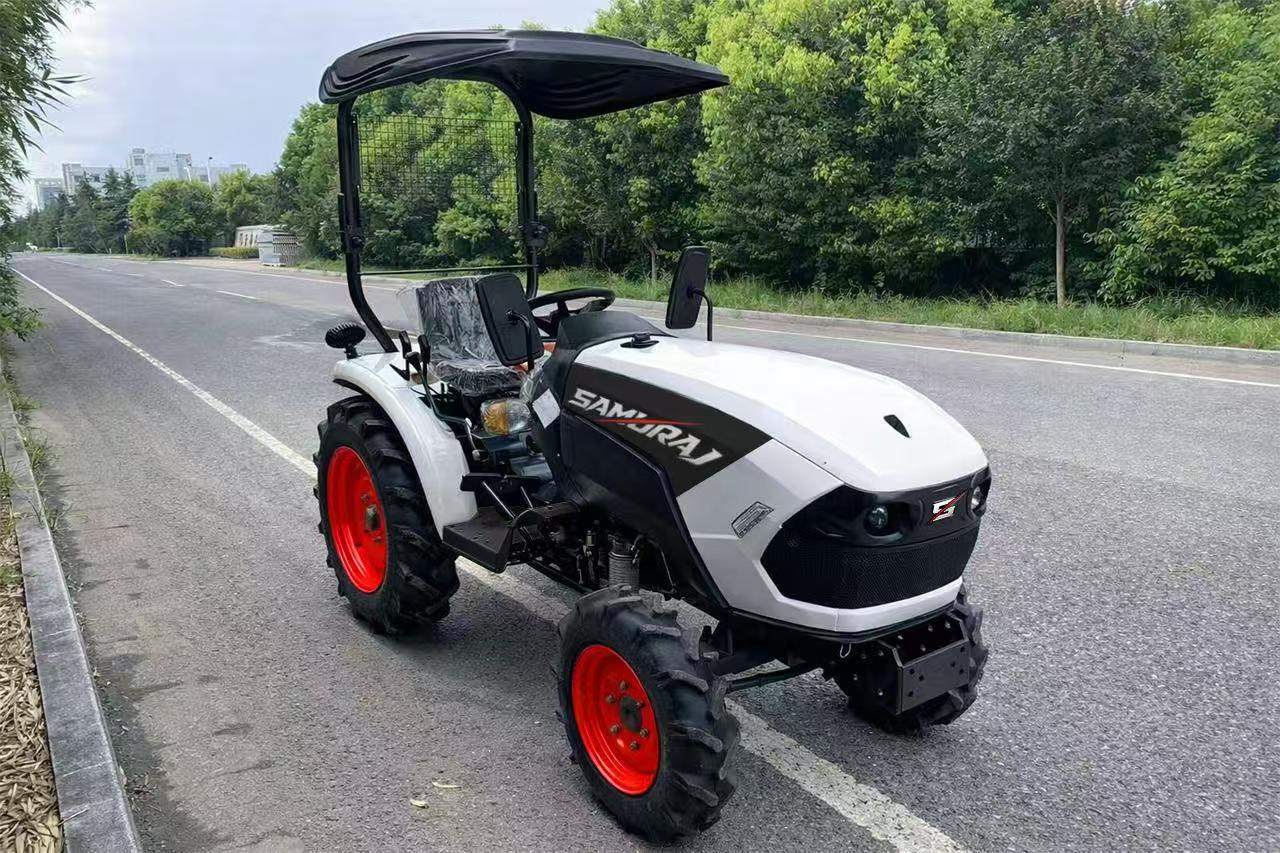
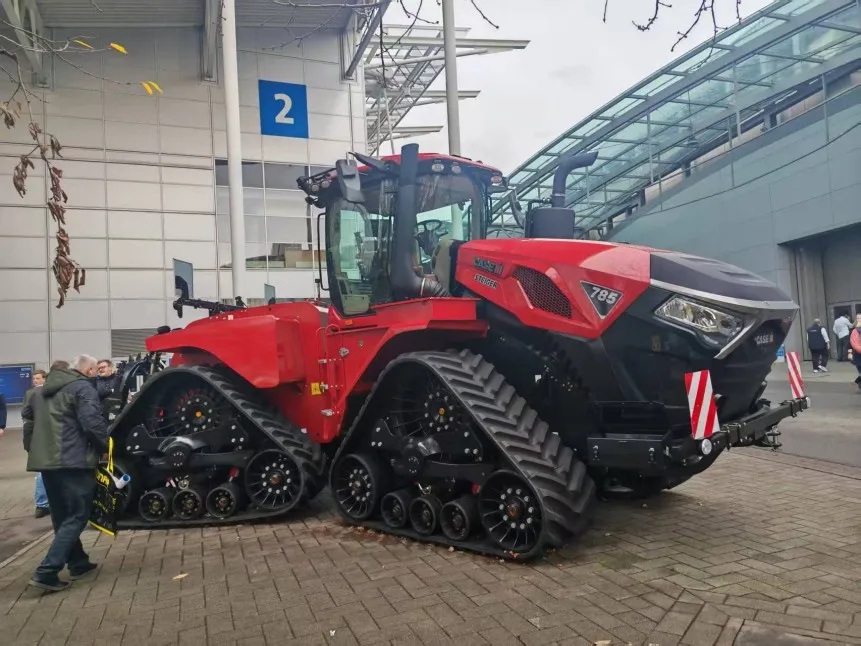
The third is a tracked tractor. The structural ratio of wheeled tractors to tracked tractors in China is seriously imbalanced, expected to reach 100:1 by 2025, while in European and American countries it is about 10:1. Tracked tractors have the advantages of high traction and low soil compaction, and have strong passability, suitable for use in hilly and paddy areas. The country also strongly supports tracked tractors. In the new three-year subsidy policy from 2024 to 2026, the subsidy amount for tracked tractors in the same horsepower range is higher than that for wheeled tractors, and the subsidy ratio for tracked tractors in some areas can reach 35%. In recent years, tractor companies have increasingly attached importance to tracked models. Currently, about fifteen tractor companies can provide lightweight tracked tractors.
The fourth one is hilly and mountainous tractors. Subsidy policies support "one large and one small" types of tractors, and hilly and mountainous tractors belong to the "one small" category. Currently, companies such as Yituo Group, Weichai Lovol, Shandong Luzhong, and Chongqing Xinyuan have launched specialized tractors for hilly and mountainous areas to the market, and users are gradually accepting this special model. Some regions have increased subsidies for such tractors.
In summary, the tractor industry is unlikely to experience significant fluctuations in 2026, but there is a high demand for segmented markets and scenarios, and the vast majority of models are supported by subsidy policies. Enterprises need to seize structural opportunities.
3、 Industry Technology Development in 2026: Struggling with Diversified Paths, Led by Greening and Intelligence
In 2026, domestic tractor companies will still face the challenge of diversified technology route selection, and it is highly likely that the ultimate answer will not be found in this year.
It can be inferred from the Hanover Exhibition in Germany and the China International Agricultural Machinery Exhibition in 2025 that there is a problem of diversified technology route selection in the tractor industry in China and even globally. Not only domestic small enterprises are deeply conflicted, but even global multinational companies such as John Deere, CNOOC, and AGCO are also in confusion. In European and American countries and regions, there are challenges in choosing technological routes for power shifting, CVT and electrification, as well as new energy sources such as hydrogen, ammonia, methanol, ethanol, etc; In the domestic market, it faces challenges such as synchronizer shifting, power steering, and power shifting CVT、 The difficulty of choosing technology routes such as hybrid and pure electric.
John Deere, CNOOC Netherlands, as well as domestic companies such as YTO Group and Weichai Lovol, have all chosen the full stack technology route of "both needing and needing", striving to bet on and not be absent from every track, and "choose all" has become the exclusive strategy of powerful large enterprises.
And the ones who are truly lost are the vast number of small and medium-sized enterprises, including about 200 tractor factories in China. In the case of limited strength and budget of enterprises, they can only choose specific technological routes. If they choose the right one, they will soar to success, but if they choose the wrong one, they will never be able to recover.
Obviously, domestic tractor companies will still face the dilemma of choosing a technological route in 2026, but in the long run, the domestic and even global tractor technology route is clear and bright, that is, green and intelligent.
Greening is mainly reflected in energy methods. There are two main ways to achieve the greening of tractors: one is to save energy, and the other is to use cleaner alternative energy.
Energy conservation includes the development of more efficient and less polluting internal combustion engine technologies, as well as interdisciplinary integration technologies such as hybrid tractors.
Cleaner alternative energy sources include hydrogen fuel engine technology, methane engine technology, methanol engine technology, ethanol engine technology, and pure electric technology.
The intelligence of tractors is mainly reflected in five aspects: intelligent navigation and autonomous driving, intelligent collaboration and variable control of work tools, adaptive control based on state perception, data interconnection and cloud intelligent management, remote management and high-level human-computer interaction. Currently, the intelligence of tractors is evolving from "single machine automation" to "cluster collaboration" and "cloud end edge integration". The future intelligent tractor will not only be a tool for executing tasks, but also an intelligent node connecting physical farmland with the digital world, and an indispensable core equipment for realizing smart agriculture.
Overall, the domestic agricultural machinery industry will face a complex situation of diversified technological development in 2026. Enterprises in European and American countries and regions are deeply trapped in the trap of diversification, making it difficult to clarify the situation, and domestic enterprises are also unable to obtain effective assistance from top European and American companies. Therefore, domestic tractor companies can only independently break through various technological traps until they find a suitable development path for themselves.
4、 Industry competition forecast for 2026: recruitment of new talents and restructuring of talent pool
According to the latest report, the Chinese tractor industry is expected to face a more complex competitive landscape by 2026. Although some people in the market expect a reshuffle in the industry, the actual situation shows that the number of companies in the industry will not decrease. On the contrary, with the development of new energy and intelligent technologies, it is expected to attract more new competitors to enter the market. Specifically, the competitive landscape of the tractor industry in 2026 may present the following changes:
One is the increasing positive friction between domestic top brands and multinational corporations. For a long time, domestic brands have been in two parallel worlds with multinational brands such as John Deere, Case New Holland, Klaas, and Aiko. Domestic brands focus on basic needs and the mid to low end market, while multinational companies monopolize the high-end demand and high-value product market.
Taking the tractor industry as an example, the domestic market for 300 horsepower and above power shift and CVT tractors has long been dominated by several European and American multinational companies, making it difficult for domestic brands to enter; And tractors with 250 horsepower and below, especially those with 150 horsepower and below, are almost entirely dominated by domestic brands. In the market, although there are overlaps between domestic brands and multinational companies, the competition is not direct and intense, it can be said that 'you hit yours, I hit mine'.
But from 2025 onwards, as domestic tractor companies overcome the difficulties of power shifting and CVT technology, they will launch domestic power shifting and CVT tractors one after another, and domestic brands will compete head-on with multinational companies in the high horsepower and high-end tractor market. Moreover, domestic brands have made rapid progress in hybrid technology. Shandong Lingong and Zoomlion have respectively launched 600 horsepower and 700 horsepower ECVT tractors, and more than a dozen domestic brands have launched ECVT tractors with 260 horsepower or more, directly impacting the high-end tractor market that was originally monopolized by multinational companies. The two camps have shifted from "well water does not violate river water" to a direct confrontation in the high-end market.
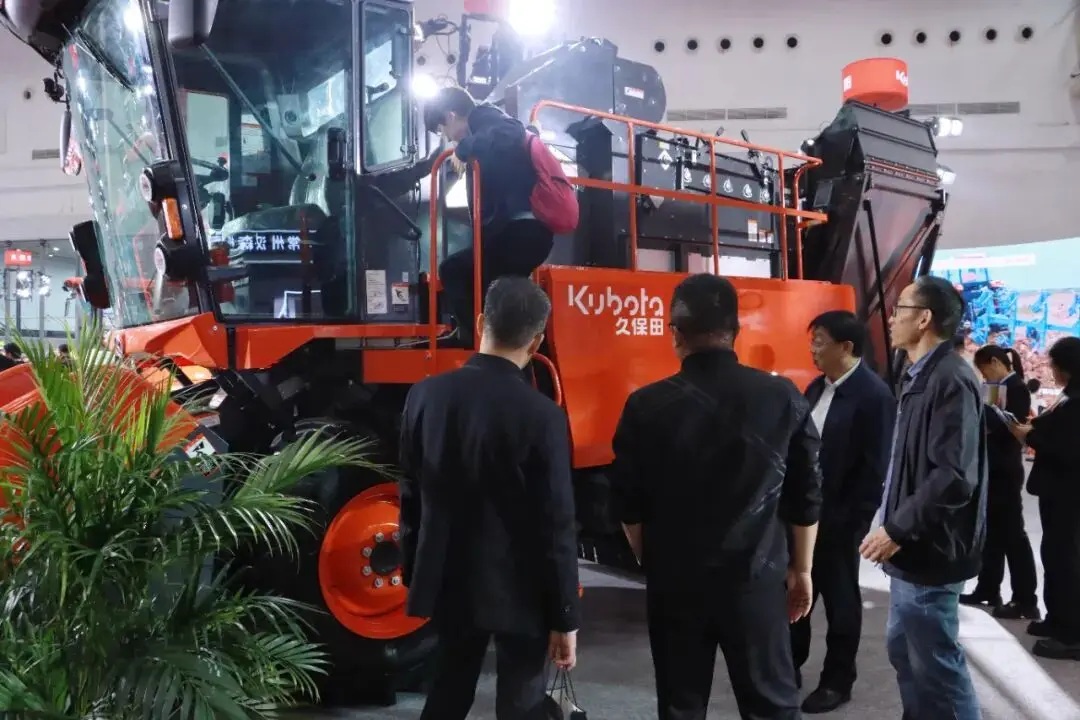
Not only in the tractor industry, it is expected that by 2026, leading domestic enterprises and multinational corporations will engage in direct competition in multiple fields such as tractors, seeders, balers, silage machines, and cotton pickers, intensifying positive friction. Competition will force multinational corporations to introduce more advanced products into the Chinese market in advance, accelerate the technological integration between domestic brands and multinational corporations, and thus promote the progress of agricultural machinery technology in China and even globally.
The second is the entry of cross-border players and emerging brands. Experts predict that the tractor industry will undergo a rapid reshuffle in 2026, with a significant reduction in the number of enterprises; But some experts believe that in the era of intelligence and new energy, with the popularization of electric and hybrid technologies, a large number of cross-border players and high-tech enterprises will flood into the domestic tractor industry, and 2026 will be the peak period for such enterprises to concentrate. Therefore, although the number of existing tractor companies may decrease, the number of cross-border and emerging brands will increase, and it is expected that the number of domestic tractor companies will increase instead of decrease by 2026. In the next few years, mechanical shifting and power shifting may emerge in China CVT、 Several major tractor brands, such as hybrid and pure electric, will also undergo restructuring and reorganization in some industrial clusters. The competitive landscape of the domestic tractor industry will undergo significant changes, which may affect the global agricultural machinery industry landscape.
The third is shuffling and elimination. The expansion of the domestic tractor industry is a normal phenomenon in the process of industry evolution. According to market analysis, the tractor industry will undergo continuous market restructuring by 2026. The market share of traditional mechanical and power shift tractors is expected to further concentrate towards industry leaders such as Yituo Group, Weichai Lovol, Changfa Agricultural Machinery, Dongfeng Agricultural Machinery, etc. As the market matures, the 'Matthew effect' will become more pronounced, meaning the stronger the stronger the stronger. At the same time, small and medium-sized enterprises that lack competitiveness and strong background support may exit the market, and their market share will be absorbed by top companies as well as new entrants and cross-border competitors.
In summary, the competitive situation in the domestic tractor industry will become more complex and volatile in 2026. The combat effectiveness of multinational corporations may be activated, and more resources will be invested in the domestic market. On the one hand, domestic brands will accelerate the reshuffle, and on the other hand, there will be constantly cross-border and emerging brands joining, presenting a multipolar and complex competitive landscape.
5、 2026 Export Situation Forecast: Steady Growth, Structural Differentiation, Innovation Driven
In the context of complex and ever-changing global macroeconomics and geopolitics in 2025, the Chinese tractor industry has demonstrated strong resilience and structural growth, overall presenting a trend of "increasing quantity and quality, diversified market, and high-end breakthroughs".
Compared to the sluggish domestic market, there is a strong demand for Chinese made tractors in overseas markets. In the past three years, the export volume of domestic tractors has shown significant growth. This is partly due to the increasing competitiveness of domestic tractors, which continue to capture a large market share from countries and regions such as Europe, America, Japan, South Korea, and India. On the other hand, domestic brands are accelerating their pace of going global, and many enterprises are investing a lot of resources and energy to explore overseas markets. In the past two years, there have been initial results.
In the past three years, the structure of exported tractor products has been optimized. In the past, hand-held tractors and small four-wheel drive tractors were the main force of domestic tractor exports, and their core competitiveness lies in low price and high cost-effectiveness. In recent years, the proportion of large tractors with 120 horsepower and above has been increasing year by year. Intelligent tractors with functions such as automatic navigation, unmanned driving system, and intelligent management system have become new growth points and are highly welcomed by overseas users. The average unit price of exported tractors is also continuing to rise, reflecting that China's exported tractors are upgrading from low to medium power to high power, high-end, intelligent, and new energy products, indicating that the competitiveness of domestic tractors is becoming stronger and stronger.
According to the analysis report on the prospects and development strategies of China's tractor industry from 2024 to 2030, it is expected that by 2026, China's tractor exports will face challenges while also welcoming new development opportunities. The overall market will show a trend of steady growth, structural differentiation, and innovation driven development.
It is expected that both export volume and value will maintain double-digit growth, primarily driven by the expansion of high value-added product exports and the exploration of new markets. The "three trends" of "high-end, intelligent, and new energy" will be the core driving forces, with agricultural machinery, intelligent agricultural machinery, and new energy tractors that meet strict emission standards in European and American countries becoming the main contributors to the growth in export value.
It is expected that the Belt and Road countries and emerging markets will continue to be a solid foundation and stable ballast for Chinese-made tractors. Demand in areas such as Southeast Asia, dryland farming regions in Central Asia, and reclamation projects in Africa is expected to remain stable. Furthermore, with domestic tractors achieving breakthroughs in power shifting and CVT technology, high-end markets in Europe, America, and North America will become major growth markets. Chinese brands need to establish R&D centers, service, and parts supply systems locally. If conditions permit, they should also promote the localization of manufacturing to enhance brand trust and achieve parity with brands such as John Deere and Case IH in specific power ranges and advantageous product areas.