
The transformation of tractor industry towards new energy
A noteworthy phenomenon is that, according to incomplete statistics, more than 300 Chinese companies and about 3000 Chinese practitioners crossed the ocean to attend this exhibition, and its scale and enthusiasm are unprecedentedly high. As a member of this "pilgrimage" team, this is also my third time stepping onto the exhibition venue in Hanover. Unlike previous editions, the core focus of this trip is on the "new energy agricultural machinery" that is currently causing a storm of industrial transformation. However, when we take the recent Wuhan "China International Agricultural Machinery Exhibition" as a reference, the scene presented in Hanover is not a complete new energy carnival, but a more grand, complex, and strategic picture of industrial transformation.
1、 Hanover's tone: New energy is the strong wind, but fuel engines are still the absolute protagonist
Entering the vast exhibition hall in Hanover, the huge and luxurious booths and the visual impact brought by the steel giant immediately clarified the main theme of the exhibition: traditional fuel tractors and combine harvesters are still the undisputed kings on this stage. This feeling is in stark contrast to the atmosphere of "a hundred schools of thought competing and competing" for new energy agricultural machinery at the Wuhan National Conference in China.
At the 2025 Wuhan National Conference, new energy tractors, especially hybrid models, have become the absolute protagonists of the exhibition. Enterprises such as Lingong Agricultural Machinery, Zhongnong Boding, and Hebei Kaite exhibited a full range of hybrid power products with multiple technological routes; In the field of pure electric vehicles, the full range of pure electric tractors from 80 to 260 horsepower from Zhongke Original Power, as well as the world's largest 400 horsepower pure electric tractor claimed by Haodi Technology, all demonstrate the aggressiveness and vitality of China's agricultural machinery industry in the new energy track. That was a collective declaration about "changing lanes and overtaking".
However, Hanover's narrative is more steady and profound. Here, flagship products showcased by international giants such as John Deere, CNOOC, Krass, and AGCO clearly reveal the evolutionary direction of traditional fuel technology:
The ultimate pursuit of power: The 9R 830 four track tractor exhibited by John Deere, the Steiger 785 Quadtrac tractor from Case New Holland (as the name suggests, 785 horsepower), and the world's largest single drum combine harvester AF10 (with a power breakthrough of 1100 horsepower) are constantly breaking the power limit. Behind this is the ultimate pursuit of efficiency in large-scale farm operations, as well as a reflection of the profound accumulation of traditional power technology.
The essential leap of intelligence: Observing the exhibits of these top brands, one will find that "intelligence" is no longer a gimmick. Front mounted automatic navigation and autonomous driving systems have become high-end standard equipment; The visual and infrared data acquisition devices and various sensors densely distributed on the body enable it to achieve dynamic, variable, and precise operations based on subtle changes in the working environment and objects. Its goal simultaneously achieves cost reduction, efficiency improvement, labor-saving, and personnel saving. More importantly, this has evolved from 'single machine intelligence' to 'joint operations'. The operational data of different links such as tractors and harvesters are connected, shared, and analyzed through a cloud based intelligent platform, forming a closed-loop "smart agriculture solution" that greatly enhances user dependence and brand competitiveness.
In this context, the role of new energy agricultural machinery at the Hanover exhibition tends to be more of a "future barometer" rather than a "current main force". Although European and American giants attach great importance to and invest in research and development, they view it more as a long-term technological reserve and strategic bottleneck. The logic behind this is intriguing: on the one hand, Europe and the United States have an open attitude towards diversified energy policies such as hydrogen and methane, which has dispersed the focus of resources on a single pure electric route; On the other hand, and more importantly, companies such as John Deere have reached the pinnacle of power shifting and continuously variable transmission (CVT) technology barriers established over decades. Their fuel power efficiency and economy remain highly competitive, leaving them with no urgent motivation to replace their traditional technological advantages with hybrid technologies. Hanover calmly tells us that the new energy of agricultural machinery is the trend, but its development path is not a linear replacement, but will be a long symphony with multiple rhythms due to differences in regions, policies, and technological heritage.
2、 The stunning debut and path differentiation of pure electric tractors
Although not the protagonist, as a barometer, the pure electric tractor at the Hanover exhibition is undoubtedly one of the stars in the spotlight. A significant observation is that multinational corporations represented by John Deere and Fantawild have shown a stronger interest in pure circuit lines than hybrid power, which may indicate their judgment on the ultimate technological path.
John Deere's pragmatic declaration: John Deere, the global leader in agricultural machinery, showcased a 130 horsepower commercial grade pure electric tractor that has completed extensive market validation. It is equipped with three 39 degree battery packs, with a structural design following the engineering philosophy of "simplicity but not simplicity", and comes with a dedicated charging station. The official has provided a clear timeline: production is planned to begin in 2026 and large-scale sales will be achieved by 2030. This is no longer an unattainable concept product, but a heavyweight bomb thrown into the market after ten years of careful consideration, setting a new height and clear roadmap for the industry to commercialize electric tractors.
Fintech's deep cultivation and expansion: Germany's Fintech, known for its technological foresight, has laid out early and invested heavily in the field of new energy. The e107 Vario pure electric tractor exhibited this time is a reflection of its technological accumulation. It is built on the mature Fendt 207 Vario platform, equipped with a 100 kWh battery and a 700 volt electric motor, with a maximum power of 90 horsepower. As the first mass-produced electric tractor in Finland, its application scenarios have covered municipal, animal husbandry, and professional vegetable planting fields. It is worth noting that Fant's exploration is not limited to pure electricity. Its synchronous research and development on alternative fuel routes such as hydrogen and methane demonstrate the diversified strategies of European technology giants in response to energy transformation.
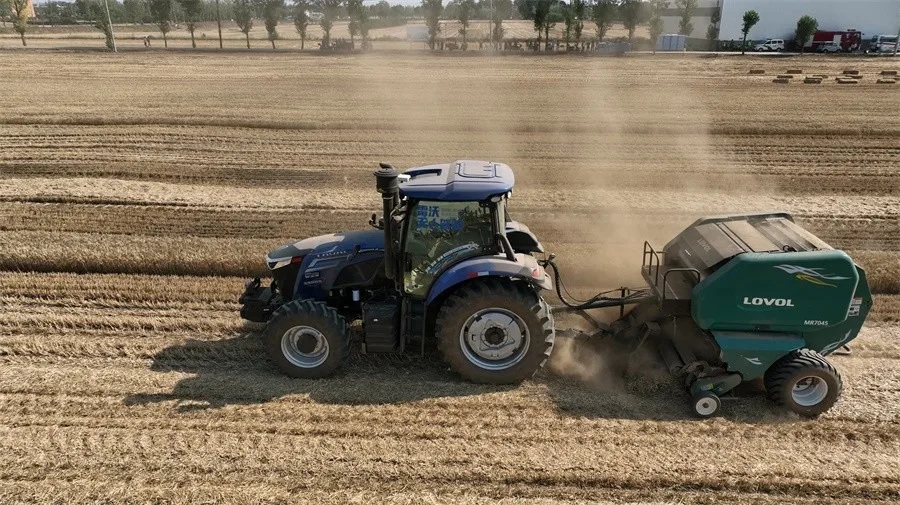
The precise attack of Chinese power: On the stage dominated by European and American brands, Chinese companies' pure electric products have successfully attracted attention with their unique positioning and intelligent advantages. The E1000 electric tractor of Weichai Lovol is specially designed for high-value orchards, horticulture and facility agriculture in the European and American markets. Its appearance and technology are exquisite. It completely breaks away from the "unfashionable" of Chinese agricultural machinery in the past, realizes the front and rear power output, and is a product with global aesthetics and practicality. Beijing Zhishen Hexing brought two 70 horsepower pure electric tractors that had already appeared in Wuhan, with their core selling point being "intelligence", attempting to build a higher technological barrier on the electrification platform.
In addition, some novel conceptual forms have also broadened the imagination boundaries of the industry, such as the R4 triangular tracked tractor exhibited by New Holland, which offers both pure electric and hybrid versions. Its highly sci-fi design is positioned in special operating scenarios such as orchards, showcasing the infinite possibilities that electric platforms bring to the design of agricultural machinery industry.
3、 Beyond Electric: Competition and Cooperation in Diversified New Energy Paths
In Hanover, the definition of 'new energy' is much broader than what we usually understand as' electrification '. An industry consensus is that "new fuels" such as hydrogen, methane, methanol, and ammonia are highly valued by European and American companies due to their ability to directly utilize existing internal combustion engine industrial systems for transformation and comply with the EU's energy strategy. This is essentially a competition between "path dependence" and "path creation".
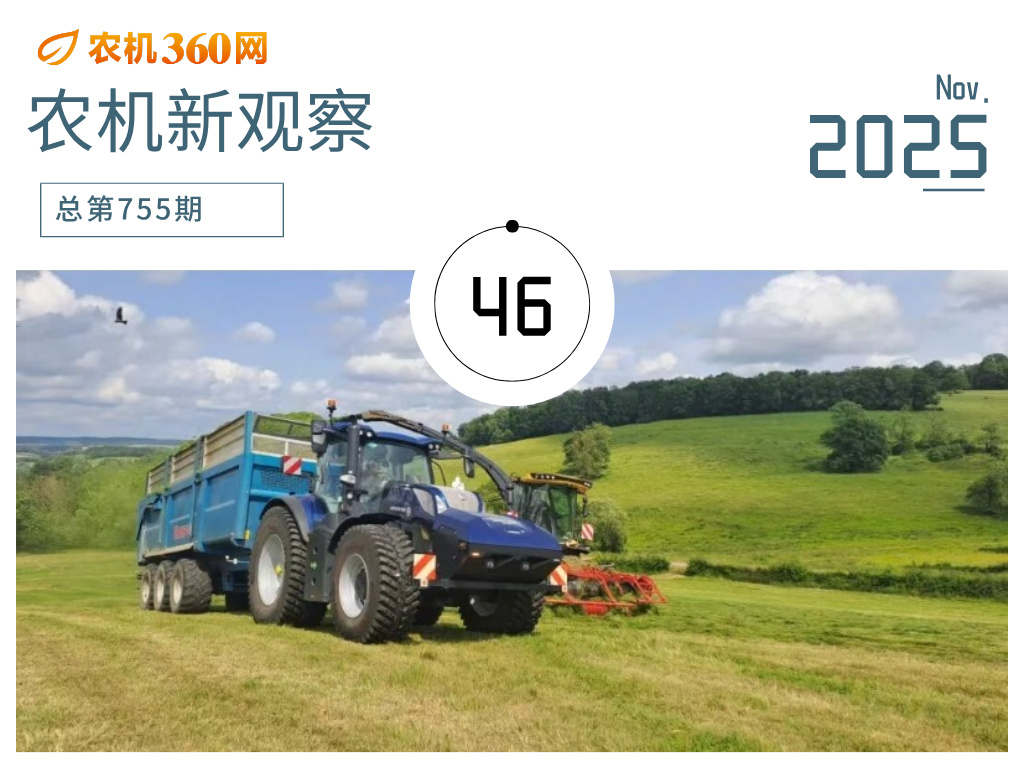
Methane practice in New Holland: New Holland, a brand under Case New Holland, is a staunch advocate for alternative fuel routes. The T7.270 methane powered tractor ("Blue Power" version) exhibited this time is a model that is close to commercialization. This 270 horsepower tractor cleverly places the methane storage tank in front of the original weight block, with a top speed of up to 50 kilometers per hour, and is equipped with advanced intelligent driving and autonomous operation systems. The most impressive thing is that the manufacturer has provided a warranty commitment of up to 5 years or 5000 operating hours, which fully demonstrates their confidence in product reliability and commercialization prospects.
Zoomlion's hybrid shock wave: At this exhibition, China's Zoomlion is undoubtedly one of the most eye-catching brands. It showcased the world's first 480 horsepower hybrid grain combine harvester H7-600E and a DV3504 hybrid tractor, with hybrid power as its core technology flagship. Objectively speaking, the power ranges of these two products accurately meet the mainstream demands of the European and American markets, and their power systems and intelligence levels demonstrate a global leading advantage. On site, it can be seen that many European and American peers and large farmers have shown great interest. Many competitors' technicians even bend down or drill into the bottom of the machine to carefully study its internal structure. This scene vividly confirms that China has achieved a transition from following to running in parallel on the hybrid technology track, and even leading in certain fields.
The segmented market of low-power hybrid: Although European and American giants have reservations about high-power hybrid, hybrid technology has found a commercial foothold in sub sectors such as facility agriculture and horticulture below 100 horsepower due to its ability to balance zero emissions and range. Some mature application cases can also be seen at exhibitions.
4、 Silent Water Flows Deep: The Technological Revolution of Industrial Chain Suppliers
The core supply chain enterprises standing behind the complete machine manufacturers often determine the depth and speed of industrial transformation. The Hanover exhibition tells us that a quiet technological revolution is being driven by suppliers such as ZF, Bosch, Carraro, and China's Yuchai.
ZF's disruptive integration: As the hidden champion of global high-end tractor transmission systems, ZF's exhibition booth is a must visit place for insights into the future. ZF has launched its second-generation electric drive solution - a highly integrated electric drive rear axle. It integrates the complex gearbox, motor, power take-off (PTO), and electronic control system of traditional tractors into a compact rear axle assembly. Taking a 200 horsepower tractor as an example, the complex mechanical transmission system, which is about 1.5 meters long in the traditional solution, has been completely "evaporated". This disruptive design not only makes the tractor structure unprecedentedly simple and easy to manufacture, but also has a fundamental impact on the tractor technology route and longitudinal structure layout that has lasted for a hundred years, with the gearbox as the core.
Carraro's Parallel Approach: Another top powertrain manufacturer, Carraro, also showcased its dual electromechanical drive solution for the 200 horsepower class. Unlike ZF's highly integrated approach, Carraro outsources the motor and two speed gearbox, but its core concept is also to "replace the engine with electricity", simplifying the structure and improving efficiency through electrification.
Bosch's 800V High Voltage Attack: Bosch Rexroth has introduced its mature 800V high voltage platform technology in the field of electric vehicles into the agricultural machinery industry. The new 800V electric drive system exhibited can provide up to 188 kilowatts (252 horsepower) of continuous power for large agricultural machinery, and its motor's short-term torque burst can reach 550 Newton meters. This high-performance solution provides a better solution for the power requirements and energy management of large electric agricultural machinery, and when combined with Bosch's transmission solution, ensures high reliability of the system under complex operating conditions.
Fiat's fuel inclusivity: The "multi energy internal combustion engine" showcased by power giant Fiat represents another approach, with its engine platform compatible with various fuels such as diesel, hydrogenated vegetable oil (HVO), natural gas, and hydrogen, providing flexibility for a smooth transition to traditional power.
Yuchai's Ice Breaking Debut: Yuchai from Guangxi, China, as a representative of China's new energy agricultural machinery supply chain, made its debut in Hanover. It showcased an extended range hybrid powertrain solution covering tractors and combine harvesters. Its emergence allows European and American peers and users to closely examine China's technological strength in the core power chain, which may indicate that hybrid agricultural machinery supported by the Chinese supply chain will become more common at the next Hannover exhibition.
5、 Trend analysis: Future prospects of global new energy agricultural machinery
Based on the comparison and in-depth observation of exhibitions in Hanover and Wuhan, we can make the following strategic judgments on the development trend of global new energy tractors and even the entire agricultural machinery industry:
Firstly, the diversification of technological routes will be the long-term norm. The new energy transformation of agricultural machinery is not purely a market economy behavior, but is strongly driven by energy policies, environmental agendas, and industry interests around the world. The unlimited supply of fossil fuels in the United States determines that the country will only focus on environmental protection rather than industrial substitution for new energy. Therefore, the new energy transformation of Meitu's agricultural machinery industry may be the slowest pole, and electrification will be the behavior of companies like Tesla; Based on its energy independence and circular economy strategy, the EU will inevitably favor sustainable fuels such as hydrogen and biomethane; Based on energy security considerations and relying on its absolute advantages in the power battery and electric vehicle industry chain, China naturally takes electrification (pure electric and hybrid) as its main focus. This policy driven "path differentiation" will lead to the parallel development of multiple new energy technology routes for a long time in the future, each occupying an ecological position in the regional market.
Secondly, the dominant position of fuel power is difficult to shake, and the transition period may last for 10-15 years. In the foreseeable future, the global agricultural machinery market will present a pattern of "oil dominated, diversified energy supplemented". Even the most promising electrification faces enormous challenges in reshaping the industrial chain, constructing infrastructure, cultivating user habits, and exploring business models. Policies can be powerful drivers and catalysts, but they cannot replace the slow penetration of the value logic and market laws of business itself. The maturity of any new industry requires a complete cycle.
Thirdly, electrification is widely recognized as the ultimate direction, but commercialization will present a clear horsepower stratification. Before the revolutionary breakthrough in battery energy density, the commercialization of pure electric tractors will mainly focus on the small and medium power range below 100 horsepower, serving fixed or short distance operation scenarios such as facility agriculture, orchards, and municipal services. In large farms and heavy-duty operations with a power output of over 200 horsepower, internal combustion engines (including the use of low-carbon alternative fuels) will still dominate in terms of energy density and sustained operating capacity. The main role of hybrid systems in this field is also to optimize the working range of internal combustion engines, whose energy source is essentially still fuel.
Fourthly, the global development imbalance will further intensify, and the Asian market may become the main battlefield for electrification. Due to the deep accumulation of traditional technology, conservative users, and large farm scale, the transition to new energy in the European and American markets will be gradual and slow, and even there will be a differentiation of technological routes within them (US vs. Europe). On the contrary, in Asia, especially in emerging markets such as China and India with strong policy implementation, strong market demand, and active industrial chains, the popularity of electric agricultural machinery may far exceed expectations. They will no longer be passive recipients of technology, but will become the most active promoters of the electrification route and testing grounds for large-scale applications, thus playing an increasingly important role in the global new energy agricultural machinery landscape.
The Hanover Agricultural Machinery Exhibition in 2025 is like a prism, reflecting the complex spectrum of the tractor industry in the unprecedented changes of a century. It not only demonstrates the advanced and intelligent integration of traditional fuel technology at its peak, but also clearly points out the irreversible direction of the new energy revolution. There is no simple substitution relationship here, only multi-level technological coexistence and strategic game. For China's agricultural machinery industry, Hanover is a mirror that shows us the gap between high-end manufacturing and system integration with the international top level; It is also a stage that has won the world's attention for our pure electric and hybrid products; It is also a classroom that teaches us that industrial transformation requires both disruptive innovation courage and a profound understanding and respect for market laws and global patterns. This energy revolution, which began, will ultimately reshape the global agricultural machinery industry landscape and competition rules in the future.